

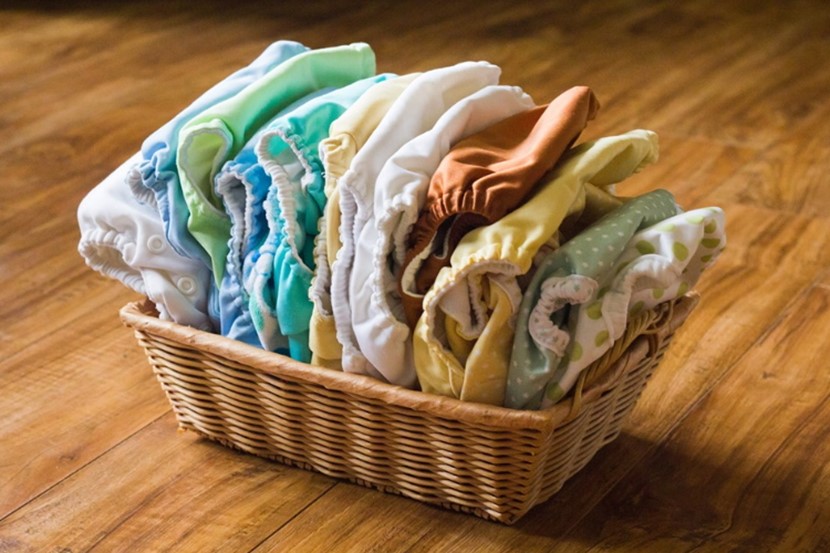
Don't know where to start with modern cloth nappies (MCNs)? Self-confessed nappy-addict Emma Fahy answers all your questions.
How many do I need?
This depends on what type of MCNs you choose and how often you plan to wash them. If you're washing every day, you'll generally need enough nappies to last two days so you can have one lot in the wash and one in use.
On average, your baby will go through around six nappies a day, but if you're planning on using them on your newborn, you should plan to use between eight to 10 a day. If you're using pocket nappies or all-in-ones, you'll need between 12 to 18 as you change the whole nappy at each change. If you're using prefolds or fitted nappies and covers, you'll need 12 to 18 prefolds or fitted nappies and three or four covers as you only need to change the cover when it's soiled.
It's always better to have a few more than you think you'll need, just in case!
How much will it cost me?
That depends on what type of MCNs you choose, and how much you want to spend. Prefolds and covers are the least expensive; you can buy enough for a two-day rotation as mentioned above from as little as $120 if you choose basic covers.
A two-day rotation of fitted nappies and covers will cost you from around $330, again assuming you chose the least expensive brands. A two-day rotation of basic pocket nappies and inserts will cost you anywhere from $360 depending on how many inserts you buy and which brand you choose. A two-day rotation of all-in-one nappies will cost you from around $360.
Of course, the old saying "you get what you pay for" is very true of MCNs, and it is definitely worth looking at some of the more expensive premium brands. As well as the cost of the MCNs, you also have to consider the ongoing costs of washing them - electricity, water, washing powder and so on.
So are they really less expensive than disposables?
There are some interesting comparisons at The Nappy Network (thenappynetwork.org.nz), but the answer is overwhelmingly yes - at an average cost of $30 per week, disposables will cost you thousands of dollars over the two or more years your child is in nappies. MCNs, on the other hand, require a larger initial outlay of a few hundred dollars, but the ongoing costs are minimal in comparison to that of disposables.
MCNs will save you even more if you use them for more than one child (another reason to spend a bit more to buy a quality brand), and they have good resale value on TradeMe.
Do I have to soak them?
Short answer - no. Unlike traditional flat cloth nappies, MCNs don't require scrubbing or soaking.
Most MCN users "dry pail" - when a nappy is wet or dirty, they flush any solids, then put the nappy into an empty, lidded bucket until they're ready to wash them. If you don't want to use a bucket, you can also use a wet bag (a bag made from waterproof fabric with a drawstring or snap closure to seal it).
How do I wash them?
Always follow the wash care instructions on the care label because the manufacturer will have tested different washing scenarios.
If they have hook and loop laundry tabs, Make sure you fold these over or do them up, as they could damage your nappies in the wash otherwise.
Don't leave them for more than two days before washing, especially if you want to reduce the chance of your nappies staying stained.
Don't soak your nappies in harsh stain removers, or use bleach - they will shorten the lifespan of your nappies and in most cases void your guarantee.
The best way to dry your nappies is in the sun, as the sun is a natural disinfectant and stain remover, so will help to keep your nappies looking new as long as possible. However, most MCNs can also be tumble-dried.
For more information on washing cloth nappies see The Nappy Lady's Guide to washing nappies
Snaps or velcro?
Both have their pros and cons - velcro closures are quicker and easier to put on, especially if you have a wriggly baby, and they are also more adjustable so you can get a perfect fit; however, velcro does collect lint in the wash and is much easier for little hands to get undone. Snaps are trickier for baby to remove and sit flatter than velcro, but they don't allow the you to customise the fit as closely.
Do I need liners?
This is purely personal choice. Some people prefer to use liners to make the nappies easier to clean, others simply flush the soiling straight off the nappy. If you decide to use liners, pay attention to the ones you choose - only some brands are flushable, so if you buy non-flushable liners, you need to have a way of disposing of them.
What about when we go out?
In some ways, it's actually easier to use MCNs rather than disposable nappies when you're out and about, as you don't have to look for a bin to discard a dirty nappy in. Keep a small wet bag in your nappy bag (many nappy bags come with a wet bag or plastic pouch) and simply pop the wet nappy into it to take home. If it's a dirty nappy, flush the solids first, as this will stop your wet bag smelling. If you find your wet bag does start to smell a little with time, a few drops of tea tree oil will eliminate odours.
What about night time?
Ah, the elusive night nappy! It's really a case of trial-and-error, as what works for one baby, might not work for another.
Generally speaking, prefolds aren't suitable for use as night nappies, but they make very useful inserts when folded into a pad shape and put inside a pocket nappy. Some people swear by fitted nappies and covers for nighttime use; in this case, you need to choose a fitted with plenty of absorption, maybe one with hemp or bamboo sewn in, or use a booster. You also need to choose a heavy-duty cover; wool covers work particularly well overnight.
If you want to use pocket nappies, it's a matter of finding one that fits snugly enough around the thighs and waist so as not to leak, but also has enough room for plenty of stuffing. Bamboo and hemp make good night time inserts, as do traditional flat nappies folded into a pad shape. Experiment until you find a combination that works for you.
For very heavy wetters, a woolen soaker over the top of a night nappy is almost guaranteed to keep the sheets dry.
What about nappy rash?
A lot of MCNs allow the skin to breathe far better than a disposable nappy, which actually prevents nappy rash. If your child does get nappy rash, check that the cream you are using is suitable for use with MCNs, as some ointments and creams can leave a waxy build-up on them which reduces their absorbency. If your child has thrush, you will need to obtain an antifungal ointment from your doctor, and add an antifungal such as Canesten or Dettol In-Wash to your load when you wash your nappies to kill any nasties.
Can my child use MCNs at daycare?
There is no one answer to this question - it depends on your child's daycare centre. Some don't allow babies to wear cloth nappies at all; others have policies which determine how they handle MCNs. If your child's centre does allow MCNs, they will most likely ask you to provide either a lidded bucket or a wet bag for nappies to be placed in over the course of the day, and then you can take it home in the evening to wash the nappies.
Am I really a bad person if I use disposables?
Not at all! Even some of the most die-hard MCN users keep a stash of disposables on hand for emergencies. When your child has a tummy bug and has dirtied eight nappies in a row and vomited on three sets of sheets, you can be forgiven for resorting to a nappy that doesn't need washing! And sometimes it's just easier to keep a disposable or two in the nappy bag for when you're out and about, or to use disposables for nighttime because you can't find a night nappy that works.
Emma Fahy is a very busy mum and very pleased that all her children are out of nappies.

AS FEATURED IN ISSUE 7 OF OHbaby! MAGAZINE. CHECK OUT OTHER ARTICLES IN THIS ISSUE BELOW











Cookie Policy | Terms & Conditions | Privacy policy | Copyright © 2024 www.ohbaby.co.nz. All Rights reserved.