
What a relief
by Liz Breslin
 Childbirth hurts. That much is obvious. But when we get down to talking about how much it hurts and the best things to do about the pain, we come up with an interesting problem. It's unquantifiable, and therefore there's a lack of useful statistics about pain and pain relief during labour.
While some online forums discuss whether passing a kidney stone or giving birth is more painful, and others liken labour pains to having root canal surgery without an anaesthetic, these comparisons are monumentally unhelpful. There have been some interesting studies on the language of labour pain, but nobody has been able to make nice neat statistics out of this information.
So I went down the fully anecdotal research route and put out questions on my Facebook page to collect some raw (sometimes very raw) data to work with. "Childbirth is so wavelike", "uncomfortable and bizarre", "fulfilling pain", "contractions from the core", "incomparably intense". Wrapped up in their descriptions of pain were descriptions of pain relief. "Mooing", breathing down, epidurals, water-birthing, Entonox, Caesareans and husband's-arm-biting all got good mentions, as did morphine during the aftermath. Earth Mothers and elective Caesarean chicks - we all do what we have to, to get us through. And leave it to a man to write, "It was a breeze - I didn't feel a thing." I would have UNliked that if I could.
Just like I UNlike this. In July 2009, Professor Denis Walsh caused more than a few ripples in the birthing pool pond when he suggested that maternity units should stop giving out pain relief in order to let expectant mothers "work with the pain" to increase the bond with their baby. Good one, Professor. I'd tell you exactly where to stick that comment if I thought it would hurt even a tenth as much as giving birth. It's all very well to tell us that pain helps us prepare for the responsibility of motherhood, but as Wellington obstetrician and mother, Anju Basu, pointed out in response on TV3.co.nz, "I don't think that you have to experience immense pain just to be able to be a good mother."
I had one baby naturally, although I was induced, and the other was a full-on emergency Caesarean. Neither birth automatically made me a better mother. And I love them both as the individuals they are, regardless of how they were born.
 The use of pain relief during childbirth is negligible in studies of birth outcomes. Infant mortality rates are affected by two major factors - access to medical care and maternal nutrition. We are in the fortunate position to have good provision for both of these in New Zealand, which may be why we rate quite highly on United Nations Population Division rankings - 27th out of 195 countries. We are lucky enough to have the choices to embrace or eschew pain relief in the knowledge that whatever we choose, we are statistically safe and well cared for.
Of course there are risks involved with pain relief - Pethidine has to be given at the right time, and too much Entonox can make you spew. Epidurals give you backache - or is it lifting babies up that does that? The key thing is to be well informed and to work with a LMC that you trust implicitly; to share your views on pain relief and to be flexible as to the best birth plan for your baby. Complications can happen even if you are fit, healthy, and firmly in your happy place.
I suppose at this point I should come clean about my own pain-relief experiences. That natural birth and that emergency Caesarean I mentioned before - they were actually only two hours apart. If anything, the more traumatic birth, for me, and for my poor son with his head wedged for hours in a tight, tight space, was my first. I had no energy left to birth the gorgeous girl who had no interest in descending anyway. Birthed both ways in one day. And boy, did the pain relief have to kick in afterwards. In a big way. Incidentally, a 2008 study conducted in Switzerland, Belgium, and the USA, documented in the Journal of the International Association for the Study of Pain, showed that the management of pain relief after delivery had more of an impact on post-partum depression rates than whether the birth was natural or assisted in any way. Pass the painkillers, please.
I wish I'd had the courage to rip up my own preconceptions, and plan to just do whatever was best for me and the kids. After all, isn't that what we learn further down the line? That parenting is a two-way street and things don't go according to plan. That sometimes pain relief is the kindest option for all concerned.
Yes, pregnancy is not an illness, it's a natural process. Yes, going to your happy place, breathing yogically, and birthing in water can all be enormously beneficial. But sometimes that's not enough. And just as each baby is different, each birth is different and each woman's pain thresholds and perceptions are different. We have to trust the men and women who work with us to assist with birthing our children. We have to allow ourselves to do whatever we think is best, at the time, for us and our kids.
Giving women the power, and the information, to make their own pain relief choices can only enhance their feelings of trust in themselves, control over and connection to the birth experience.
Liz Breslin is a freelance writer based in Hawea Flat, New Zealand. Her short stories, poetry and articles, including a series of opinion pieces called "Mum's the Word", have been published in New Zealand and abroad. She has also written a play called Losing Faith: A Tale of PND, exploring the issues of postnatal depression through the constraints of coffee group culture.
It's only natural
by Laura Williamson
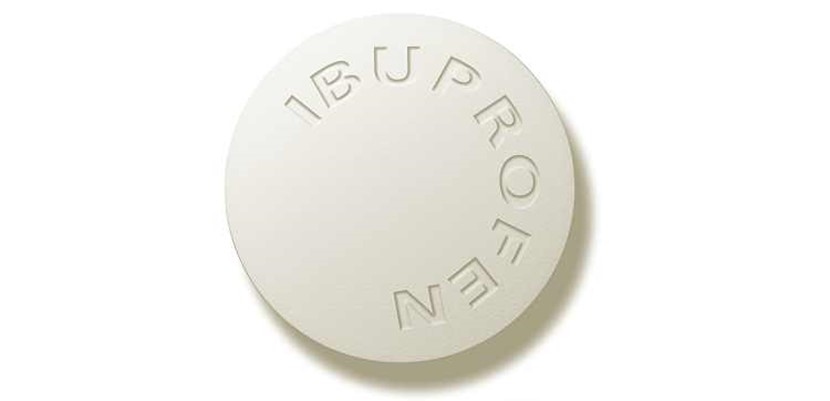
 We live medicalised lives. When it comes to minor complaints, there is very little we can't fix with a pill: Sprain a knee, take an anti-inflammatory; get a headache, pop an ibuprofen. And why not? No one likes a headache. So it should be for birth, some would argue. After all, labour really hurts, and we have the means to make it better, so why suffer?
Because it's not that simple, that's why. The pain of childbirth is different from other kinds of pain, that of a broken arm, say, or a burn. Broken bones hurt because something is wrong; childbirth hurts even when things are going right.
Case in point: When the first modern anaesthetic was introduced in the 1840s, doctors were hesitant to use it in childbirth - they were afraid that stopping the pain would stop labour itself. Laughably untrue (let's face it, nineteenth century medicine was shonky at the best of times), but interesting. Early medical professionals were grappling with a question that we are still debating today, whether labour pain is a symptom that should be cured or a valuable, even necessary part of the birth experience.
Early experiments in labour anaesthesia had mixed results. Queen Victoria supported the practice, commenting, when her daughter gave birth in 1859, "what a blessing she had chloroform." But the use of "twilight sleep", a blend of chloroform and scopolamine, had a limited effect on pain and could be toxic. It also left many women with no memory of giving birth at all. By the 1940s, obstetricians such as Fernand Lamaze were advocating a return to natural childbirth.
The feminist viewpoint has swung about in a similar way. Pioneering feminists such as Isadora Duncan fought for pain relief. She called childbirth a "monstrous torture", and argued that if painkilling technology existed, we should use it: "It is simply absurd that, with our modern science, painless childbirth does not exist as a matter of course." Duncan certainly disagreed with the old claim that labour pain is God's punishment for Eve's Garden of Eden shenanigans, and good on her. But today, many feminists deem medicalising childbirth a patriarchal intervention in the most empowering event of a woman's life. As Gloria Steinem told Ms magazine, "childbirth is more admirable than conquest, more amazing than self-defence, and as courageous as either one." Many women now argue that pain is a part of birth, and birth is an experience we should cherish in its entirety.
I took Pethidine when I was in labour. It wasn't good. I threw up on my midwife and had a hallucination which haunts me to this day. (It involved Jimi Hendrix and the wee man with the hunchback from The Rocky Horror Picture Show. Really). The drug may have been necessary - I certainly asked for it. But since then, I have wondered whether my attitude towards labour beforehand affected my outcome.
To be honest, I was a bit with Isadora Duncan as my due date approached, scared and more than a little peeved that my lot as a woman was to endure immense physical suffering in order to be a parent. It had never occurred to me that I wouldn't use pain relief, and so I did. But talking to other new mothers afterwards, I was struck by how positive the experience had been for some of those who did it without drugs. They described immense pain, sure, but also the immense power of a moment that, for me, was nothing but a blur.
Experience aside, as with many things medical, there are good reasons to avoid intervention unless it is necessary. An epidural, for example, can slow a woman's labour by affecting the function of her pelvic floor muscles, increasing the likelihood of a Caesarean. Pethidine can impair early breastfeeding, and Entonox makes you sick and dizzy, not to mention babble like an idiot.
Natural pain relief options are, by comparison, benign. These include water (a bath or a shower), TENS, massage, breathing, music, visualisation and moving around, choices which are all now actively encouraged in hospitals, a far cry from the 1940s when my grandmother gave birth. She recalls being strapped to a bed and sedated with chloroform, and that's all she remembers. For her, the rest is darkness.
When it comes to natural childbirth, we are at an advantage in New Zealand. In this country, midwives can be independent lead maternity carers, meaning women can opt to be in the care of a midwife whether she gives birth at home or in the hospital - here, birth is not strictly defined as a "medical" procedure requiring the presence of a doctor. As well, Plunket offers free antenatal classes in which all pain relief options are explained, including natural ones, and we have resources such as the Pink Kit to help us prepare for labour. These are all things I wish I, when pregnant, had taken more notice of.
Childbirth is a natural process, one which can be as profound as it is painful. Can we fix it? Sure we can. But we should think twice before we do.
Laura Williamson is a Wanaka-based freelance writer and editor who has been published in newspapers here and abroad over the last 15 years.Her work has appeared in Brain, Child magazine, she writes a regular column for Spoke, a New Zealand cylcing publication, she is the Wanaka correspondent for QT Magazine and has written for the Otago Daily Times.

AS FEATURED IN ISSUE 12 OF OHbaby! MAGAZINE. CHECK OUT OTHER ARTICLES IN THIS ISSUE BELOW






Cookie Policy | Terms & Conditions | Privacy policy | Copyright © 2024 www.ohbaby.co.nz. All Rights reserved.