Clinical nutritionist Gina Urlich talks all about starting your baby on solids
OHbaby! founder Angela Pedersen talks to OHbaby! clinical nutritionist and founder of Norish baby food, Gina Urlich all …

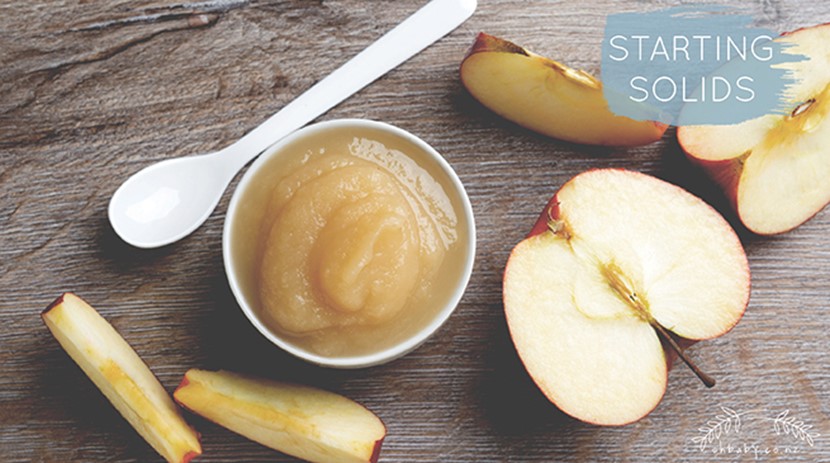

OHbaby! founder Angela Pedersen talks to OHbaby! clinical nutritionist and founder of Norish baby food, Gina Urlich all …

The arrival of winter can bring coughs and colds. Keeping your little ones healthy and strong can be helped along with these …

You may have heard about ‘100 First Foods’ or ‘100 Foods before One’ but what does this mean and how do you achieve it? Jennifer Douglas, Paediatric Dietitian at Jumpstart Nutrition explains. Starting on solid foods is an exciting time with your …

Making mealtimes a positive, enjoyable experience is one of the best things you can do to set your baby up for a lifetime of great eating habits, Nadia Lim explains... The starting solids journey is an exciting one for both you and baby – it’s a …

Introducing your child to solid food can seem a daunting task, but it’s actually quite intuitive, reassures dietitian Jennifer Douglas. Here she breaks down the process by age and stage. Feeding your baby and toddler is an experience that many …

If you have a fussy eater, or have been on a crusade to change your eating habits, read on. Nutritionist Leanne Cooper says our relationship with food begins at a very early age. Why is it that some foods appeal more to us and our children than …

Allergy testing is no easy task. Natasha Berman and Asti Renaut share their inside knowledge for the benefit of fledgling food detectives. Assessing reactivityIf you have a suspicion that an unknown food may be triggering unwanted symptoms in your …

When your child has an allergy, food can spell fear. But help is at hand. Nutritionist Hannah Gentile shares tools to help parents manage. I very clearly remember my personal introduction to food allergies. We were on holiday in Florida with our …

Starting solids can serve up a smorgasbord of questions. Nutritionist and mum-of-two Laura Anderson shares her tips regarding the best first foods for baby, and when to offer them. So you’re entering another new stage of parenthood – the …

Baby Led Weaning was one of those Perfect Mummy-sounding things I would never have tried if I weren't so easily convinced by parenting books. The magic words "no puréeing" contain the hidden meaning of no cooking, no cleaning the blender, no filling …

Baby-led weaning is a way to introduce solid foods to babies. Instead of spoon-feeding baby cereal and purees, you'll skip straight to finger foods and let your baby feed themself. 1. Follow your baby’s cues to assess when she is ready to …

According to Plunket your baby can try a range of foods from about 6 months old. Baby will cope best with one new food at a time, and just small amounts to begin with. If you buy baby food be sure to purchase for the age and stage your baby is at. …

Confused by all the messages about food for babies? Stress no more - here are some handy tips on how to make seamless transitions from one stage to the next. 🥄 When is the right time to start? During the first four to six months, your baby's …

From mash to mush, baby food comes in a variety of textures important to your child’s development. Sometime between four and six months old, your baby makes the exciting transition from a diet solely consisting of milk to one that includes solid …

Adding solid food to your baby’s diet can be hard to swallow. Nutritionist Laura Tari calms your fears. When your baby starts eating solids, breast milk or formula will still be the main source of nutrition. This takes the pressure off knowing …

Introducing your baby to solids is an exciting journey, but there are lots of unknowns for first-time parents. Jennifer Douglas, from Jumpstart Nutrition, guides us through starting solids. Every baby’s journey of starting solids is different …

When and how to start solids has been hotly contested over the years. Hannah Gentile gets back to the facts and shares tips for making the transition a smooth one. Introducing solid foods is probably one of the most heavily discussed areas of …

OHbaby! Nutritionist Anna Hansen shares nine tips for getting optimal nutritional value into your baby's food. 1. By adding healthy fats to a baby's meal, your precious bundle will be absorbing more nutrients from the other foods. Good fats are …

Introducing your baby to solid food is a significant – but daunting – milestone. Nutritionist Hannah Gentile is here to help you serve up solids with confidence. Starting solids is often a much-debated topic. Questions abound! What age to start, …

When should solids be introduced?From 4 to 6 months, although most commonly closer to 6 months as recommended by the Ministry of Health. Up to the first 4 to 6 months of an infant's life, breast milk or formula will provide all their nutritional …

Starting solids is an exciting milestone but often fraught with conflicting advice, complicated guidelines and rejected puree splattered on the floor. See what happens when we served a winter roast to four babies of various ages. Before inviting …

Tiffany Brown investigates “baby-lead weaning” and asks why some parents and experts are seemingly at odds over its benefits. Starting solids is a milestone many parents approach with trepidation, anticipating battle scenes that must be stoically …
Cookie Policy | Terms & Conditions | Privacy policy | Copyright © 2024 www.ohbaby.co.nz. All Rights reserved.