
Four weeks pregnant
YOU
You may be beginning to suspect you are pregnant. This is the week when you may miss your first period. Your embryo secretes hormones that trigger a number of changes in your body: your ovulation cycle stops, so therefore does your period, your cervix mucus thickens, your uterine wall softens and your breasts may feel heavy and tender as they begin to grow. These are some of the early signs of pregnancy. The strength of your immune system will also be reduced so that your embryo is allowed to grow and not treated as a foreign body and rejected.
A pregnancy test at this stage may show a positive result. Pregnancy tests measure the amount of Human Chorionic Gonadotropin (hCG) in your body, this is a hormone that is secreted by the developing embryo and helps to maintain it's growth. hCG can be measured in either your urine, using a home test kit, or by having a blood test done.
YOUR BABY
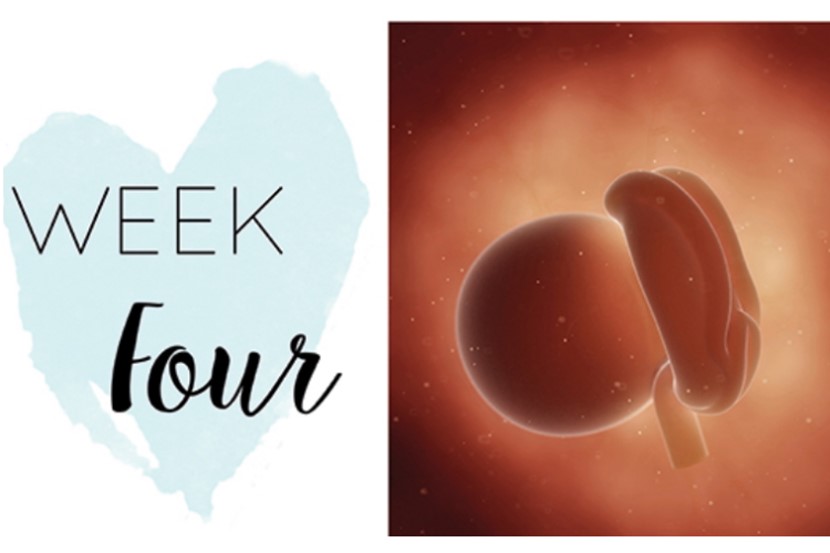
Once implanted, the outer layer of your blastocyst forms a protective cocoon around your embryo and connects with blood vessels to form the placenta, the support system for your growing embryo, which includes amniotic sac (the watery area in which your embryo floats), the chorion (cushioning around the amniotic sac) and the yolk sac (which produces blood cells until your baby's liver matures later in the pregnancy). Your baby is tiny, 1mm in length, about the size of a peppercorn flake.
Things to Consider:
• If you think you might be pregnant, start taking a daily folic acid supplement. Folic acid is an important nutrient for fetal development. Taking folic acid as soon as you stop using contraception is a good idea. Studies have shown that taking a folic acid supplement reduces the risk of some birth defects such as Spina Bifida.
• Stopping or limiting smoking, drinking alcohol or taking recreational drugs.
• It's a good idea to let your GP know you are hoping to get pregnant, or are pregnant. If you are taking prescription drugs or herbal or homeopathic remedies you will need to discuss this with your doctor or pharmacist, as your medication may need to change.
• Try to avoid taking over-the-counter medicines. If you do, be sure to tell your pharmacist that you are pregnant as some medications are not considered safe during pregnancy.
• If you currently take vitamins, it's a good idea to switch to a good pregnancy multivitamin. Your pharmacist will be able to give you advice on which ones are right for you.
• Finding a few good pregnancy books.
• Finding out how to soothe sore breasts. Some things which may help are ensuring you have a comfortable bra, and having a hot bath or shower.
• Think about your exercise routine, and whether you will need to make any changes to it. See here for some great tips on exercise during pregnancy.
• Start thinking about the changes you'll need to make and how to get your life ready for a baby. Do you qualify for Paid Parental Leave? Are you planning to give up work? If so, how will you survive on one income? If not, how much leave will you take and what are your childcare options? Where will baby sleep? What about car seats, buggies and nappy bags? Check out the Product Reviews section of our message board to find out what other OHbaby! mums and dads recommend.
• Could you be expecting more than one baby? It's possible if you've had fertility treatment or there are twins in the family.
• Adequate vitamin intake, especially folic acid, protein, calcium, and iron, is essential for nourishing your baby. A folic acid supplement - which, ideally, you've been taking since before you conceived - is particularly important because folic acid helps prevent defects of the neural tube (the head, spine, and related structures), which forms very early in pregnancy.
• Your intake of protein, which is used to create new tissue, should double during pregnancy - you should be eating at least 60 grams a day. In addition, calcium, at least 1,200 milligrams, is necessary for the development of bones and teeth, so make sure you're getting a good dose of dairy products, leafy green vegetables, and legumes. Iron is essential during pregnancy as you support the continual increase of your baby's blood volume. Good sources of iron include red meat, legumes, eggs, and leafy green vegetables, and you should consume at least 30 milligrams of iron daily.
• Don't be downcast if your pregnancy test is negative or your period starts. In an average cycle, you have around 25% chance of conception, so it may take a few months, but if you've been trying for a year or more (or for six months if you're over 30), ask your GP for a referral to a fertility specialist to discuss your options.
| << Week Three | Week Five >> |