
Obstetrician/gynaecologist Dr Anil Sharma sheds light on what's really important when looking after yourself and your growing bump during pregnancy.
The one thing you can be sure of receiving during pregnancy is advice. What to eat, what not to eat, how much to exercise, why you should relax... Some advice will be useful, but some is unsolicited and anxiety-provoking. From the point of view of an obstetrician/gynaecologist, here's what I recommend.
Foods to enjoy
Your diet should ideally include all four major food groups:
☙ Vegetables and fruits - around seven servings a day.
☙ Cereals, pasta, rice or bread (brown or wholegrain is best) - around six servings a day.
☙ Dairy (milk, yoghurt, hard cheeses, etc) - two servings per day, ideally the lower-fat versions.
☙ Protein (fish, chicken without skin, eggs, trimmed meat, nuts and pulses) - at least one to two servings a day. Vegetarians should supplement with iron and possibly vitamin B12. In general, a serving of meat should fit in the palm of your hand, and a portion of carbohydrate should fit in your cupped palm.
Foods to avoid
Listeria is a flu-like illness caused by a bacterium, and can occur after eating cold or raw fish or seafood products (including sushi). It can cause significant harm to your pregnancy and these foods should be avoided. Similarly, one should stay away from pâté, pre-cooked chicken, ham, all pre-cooked meat products, soft cheeses (brie, camembert, etc), stored salads, coleslaws, unpasteurised milk products, and any food prepared and stored in the fridge for more than 12 hours. When the munchies strike, healthy snacks such as yoghurt, washed fruits and vegetables, nuts, dried fruit, or drinks such as fruit smoothies are much better for you and your baby than chocolate bars or packets of over-salted chips.
The fallacy of 'eating for two'
For women with an ideal BMI (body mass index, calculated as weight in kilograms divided by height in metres squared) of 20-25 before pregnancy, the recommended average daily increase in calories is nil extra in the first trimester, 350 in the second, and 450 in the final trimester. 350 calories is around two slices of wholemeal bread with light butter, a 150g carton of yoghurt and an apple. See www.nhlbisupport.com/bmi for an online BMI calculator.
When the munchies strike, healthy snacks such as yoghurt, washed fruit and vegetables, nuts, dried fruit or drinks such as fruit smoothies are much better for you and your baby than chocolate bars and packedts of over-salted chips.
Obesity
Obesity affects reproductive health and pregnancy in many ways, including increased difficulty conceiving, spina bifida in the baby, diabetes in pregnancy, raised blood pressure, and clots in the legs that can break off and go to the lungs.
Birthing outcomes are also affected, with an increased risk of a blood pressure condition (toxaemia), difficult labour, admission of the newborn to the neonatal unit, instrumental delivery and caesarean section (and greater complications of the caesarean). There are also greater chances of unsuccessful breastfeeding and postnatal depression. In an ideal world, women (and their partners, for different reasons) would lose weight to ensure they are in the normal weight range for their height before getting pregnant. Nevertheless, dieting during pregnancy is not a good idea. Eating sensibly and doing regular exercise can prevent the excessive weight gain that is possible during pregnancy.
Fluids
Drinking around 2-2.5 litres of fluids a day (six to eight glasses of water) helps prevent bladder infections. It is generally considered sensible to stick to a maximum of two caffeinated drinks (tea, coffee or cola) per day. Alcohol is best avoided completely.
Exercise
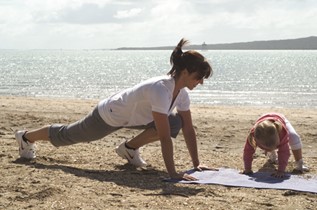
If you have other medical conditions, please see your doctor before starting any exercise programme. If there are no problems with your pregnancy, then swimming, walking, light aerobics, and exercycle machines are all beneficial, as long as you are comfortable. Regular exercise is to be encouraged, as the positive benefits, including lower blood pressure and improved self-esteem, outweigh the theoretical disadvantages, and studies have backed up this general advice. Aim for 20 to 30 minutes of moderate activity each day, and walk up the stairs instead of using the lift (maybe some of your non-pregnant colleagues will be inspired by the example you set!).
As the ligaments (a band of tough tissue that fixes two bones together) in your body relax during pregnancy, you are especially vulnerable to injury, particularly in the pelvis and back. Swimming is an excellent form of resistance exercise in pregnancy. The weightlessness experienced during swimming is relaxing as well as energising.
There are also a number of group pregnancy classes that are run at local gyms, many by physiotherapists. Camaraderie tends to aid activity. Remember to keep sedentary activities, e.g. sitting at a computer or watching TV, to a minimum and get up for a stretch and a walk every 20-30 minutes.
It is important not to overheat and, in later pregnancy, to avoid exercise that involves lying on your back. Doing exercises at a cool time of day is a good idea, and five minutes of pre-exercise warming up and cooling down afterwards is sensible to avoid injury.
If you have been running on a regular basis when you become pregnant, it is generally fine to continue until it starts to become uncomfortable. If you have not been a regular runner, pregnancy is not a good time to take it up!
Scuba diving, body-contact sports, and high-altitude climbing should also be avoided. Using hot tubs, steam rooms, saunas, or spas during pregnancy are generally not advised.
If you have not been doing any regular exercise before pregnancy and want to begin, walking is the cheapest, safest, and most beneficial option. Walk for at least half-an-hour, four times a week. Start off slowly, building up the speed and distance as you get fitter. Another benefit of walking is that it is easy to continue once the baby is born. Most babies enjoy being walked (and sleeping!) in a stroller, and you may find it is a good way to keep you both content, and your partner fit as well.
Lifestyle factors
Generally, sex during pregnancy will not harm the baby, although if bleeding has occurred during pregnancy, many women feel more reassured by avoiding intercourse. Other issues, such as a recent procedure (chorionic villus sampling or amniocentesis), or a low-lying placenta, can mean that avoiding sex is important. If there is any doubt, please ask your lead maternity carer. In the absence of any medical conditions that contraindicate sex during pregnancy, there is no difference between what is "normal" in either pregnancy or non-pregnancy.
Some stress during pregnancy is universal, as it is outside of pregnancy. We all experience stress, although we deny it much of the time. Stress can be harmful during pregnancy, and it is reasonable to at least try and reduce your stress and anxiety levels as much as possible.
What can stress during pregnancy cause?
Some studies have shown that very high levels of stress may contribute to an increased risk of premature birth, or low birth-weight babies. We all know that high stress levels can make us "unwell", increasing our heart rate, blood pressure, and producing chronic anxiety. Although we have no hard and fast evidence, as it is difficult to allow for "life factors", there is growing recognition that our in-utero environment, and what we are exposed to while we were in it, can affect us once we emerge into individual existence. In the same way that what you eat affects your baby, so too do your stress levels.
Managing stress during pregnancy (and beyond!)
This means looking after yourself, feeling rested and relaxed, and finding healthy ways to relieve stress and anxiety. The idea is to feel better yourself and thus help the pregnancy develop optimally.
Once again, eat a healthy, well-balanced diet, as this provides sustained release of healthy building blocks from which you will feel better than if you eat junk food (just watch the movie Supersize Me!). Not only will you be more alert, but also, your baby will have healthy building blocks with which to grow.
Get enough sleep, as the less sleep we get, the more stressed we are. Ensure that you have comfortable pillows or even a body pillow. Perhaps treat yourself to nice new sheets and a relaxing bath and music before bed. To minimise heartburn when lying down, avoid eating up to one hour before bed. Once your "bump" is getting bigger, you may find it much more comfortable to sleep on your side.
Once again, regular exercise is a great way to help cope with stress and will (after a few weeks of sustained exercise), give you more energy for life's tasks. It should also leave you more tired and relaxed at bedtime. Avoid exercising just before bedtime, as it may prevent you falling asleep. Relative fitness in pregnancy can also help ease labour pain and alleviate some of the anxiety in labour and birth.
You may wish to try other stress-reduction techniques, including yoga or meditation. Make sure that you seek professional advice and that the classes are aware that you are pregnant. Some women find that aromatherapy is useful, but again, get qualified advice. Massage therapy is another way of alleviating stress but make sure that the therapist is qualified and knows you are pregnant. Saunas and hot pools are not advised, as raising your body temperature for a prolonged period is not good for your circulation, or the baby. Talking with your partner and planning for the forthcoming physical, emotional, and financial changes in your lives is very worthwhile, and can help you to work through your anxieties.
If you can afford to, try and reduce your workload. Carrying a baby (or babies!) for 40 weeks is a lot of hard work. Accept the help that may be offered by workmates, family and friends. If you find you are getting very stressed about the impending birth, ask your lead maternity carer for advice. Most of the time he or she will be able to alleviate your worries and support you.
Antenatal classes are designed to empower you with the knowledge required to cope with the fear of the unknown. If you find there is anything that only makes you more worried, feel free to ask the educator more detailed questions.
Take time out for yourself. Looking after your well-being is much more important than housework. The first and last trimesters of pregnancy, in particular, can be very tiring.
Parting advice
Asking for help can be very difficult, but remember that many people around you, including friends, family, and caregivers, have been through pregnancy themselves and will gladly help if asked. If you feel particularly low and unable to cope, do discuss this with your caregiver, as specialised advice and help is available.
Remember, also, that lugging around heavy baskets of washing and vacuum cleaners is not such a great idea in the final trimester of pregnancy, not least because of the easily injured ligaments of the pelvis and back. If you are doing too much, cut back in areas which aren't a high priority, and ask your partner to muck in.
|
Dr Anil Sharma is a specialist doctor in Gynaecology and Maternity. He is very involved in lectures and updates for family doctors and frequently takes part in debate regarding women's health and maternity for print media and radio. He believes that anxiety and fear can be conquered by knowledge. Anil immigrated to New Zealand from the UK in 2001 with his wife, Rachel, and he tries hard to be a hands-on and fun father (putting golf and cars on hold for the time being) to their three daughters, who were all born here. For further information about Anil's practice, visit www.dranilsharma.co.nz |

AS FEATURED IN ISSUE 3 OF OHbaby! MAGAZINE. CHECK OUT OTHER ARTICLES IN THIS ISSUE BELOW










Cookie Policy | Terms & Conditions | Privacy policy | Copyright © 2024 www.ohbaby.co.nz. All Rights reserved.