


Finding out your child has a cleft lip or palate can be frightening, but as one Auckland mum shares, with our well-equipped health system, there's little to be afraid of.
The first time we heard the term "cleft palate" was when the paediatrician told us that our son had one, within 15 minutes of his birth. We'd been for all the antenatal ultrasounds, including the anatomy scan, and everything had seemed fine. Following a long birth, with Jacob in some distress, and eventually welcomed to the world with the help of a ventouse cup, our adventure began. Jacob had low Apgar scores, and needed some oxygen, so the paediatrician was called to the delivery room. During his physical check, he called over to us, "You know about his cleft palate, don't you?" Our perplexed faces told him all he needed to know. We have learned so much about clefts in the past year, including how common they are, and really wanted to share our experiences, in the hope that it will be of help to others.
In the early days, as word was spreading to friends and family that Jacob had a cleft, we had dozens of concerned friends expressing surprise that he "looked normal". They (and we) hadn't realised that clefts can affect the lip or the palate (roof of the mouth) or both. Our son has a cleft palate, without the cleft lip. There are all sorts of other designations, such as bilateral (both sides of the mouth involved) or unilateral (one side), and whether the cleft affects the hard palate (front of the mouth), or the soft palate at the back. Essentially, a cleft is a hole - an area that didn't close up/come together during the baby's development in the womb. The cleft is formed very early in development - as early as the 4th week of gestation - when most of us are finding out we're pregnant! Clefts are incredibly common, affecting up to one in 700 babies. With around 60,000 babies born in New Zealand every year, that's almost 90 babies each year born with a cleft.
Within a few days of Jacob's birth, we had a visit from a cleft co-ordinator from the regional plastic surgery team. She was excellent - answering our questions and telling us what would happen over the next few months. She gave us The Blue Book, produced by Cleft New Zealand (www.cleft.org.nz), and packed with information. Within six weeks, we met with the surgeon and his team, including speech therapists (they specialise in feeding issues, as well as speech), and orthodontists (yes, Jacob will get free braces for his teeth if he needs them in later life!). They advised us that cleft palates are usually repaired between nine and twelve months of age, later than a cleft lip repair. So we settled in for our wait until Jacob was old enough for surgery.
During the intervening months, we had significant issues with feeding, made more difficult by the fact that Jacob had a condition that resulted in low muscle tone, in addition to his cleft. Apparently, many children with a cleft lip can breast-feed, but Jacob's cleft palate, combined with his muscle tone issues, meant that he could not breastfeed. The speech therapist who visited us in hospital and at home provided a variety of specialised feeding bottles, but Jacob struggled to use these. He ended up being fed expressed breast-milk through a naso-gastric tube for six months until he was strong enough to drink from his bottle. I've been told this is unusual - most cleft babies can feed from a specialised bottle, and/or the breast.
We were advised to start solids earlier than usual (about four to six months), as cleft babies sometimes find it easier to eat solids - milk moves around the mouth quickly, whereas food moves slower and more predictably. Jacob enjoyed solids, but they were messier than usual - there is essentially no division between the mouth and the nose, so food easily enters the nasal cavity, causing lots of irritation, which leads to sneezing and food coming out of the nose. This also made Jacob prone to choking, so we were careful to feed him in an upright position.
Another issue we've grappled with is glue ear. Babies with a cleft are more likely to have a build-up of fluid in the middle ear (known as "glue ear") because their palate is not able to assist with clearing the fluid, as it would normally. Jacob got glue ear quite early on, and his hearing was affected. So we had regular checks with an audiologist and ENT specialist, and he was fitted with a temporary hearing aid, worn on a stretchy band around his head, to ensure he didn't miss out on that all-important early exposure to sounds. The plan was to insert tiny ventilation tubes (grommets) into his ear to drain the fluid after he'd had his cleft palate surgery.
The health professionals involved have been wonderful at helping us come to terms with these issues. In addition to this, several people from Cleft New Zealand have phoned at key times to offer support and advice. There are some experiences that are unique to cleft babies, and it's invaluable to have someone to talk to who's been through it before, and come out the other side!
Some of the unique experiences we've had have almost always included shopping malls. Jacob tended to make slightly unusual noises, especially when he was asleep and his airway relaxed. He'd grunt, whistle and snort, at least partly because of the cleft. One funny incident comes to mind - I was clothes shopping with a friend and had asked her to mind Jacob, who was asleep in his buggy with a cover over him. Through the changing room door, I heard a woman approach my friend, and say something like, "That baby is choking, you need to help him!" My friend quietly reassured her that he was simply asleep, and that he tended to make those kinds of noises!
Jacob had his palate repaired when he was ten months old. We stayed in hospital for five nights due to complications, but otherwise would have been allowed home after one night. The surgery and recovery went much more smoothly, and were less scary than I had anticipated. The surgeon and his team cover the entire Auckland region, and are specialists in dealing with clefts, which helped me to feel at ease.
Things have changed dramatically in the few months since the surgery. The intact palate, with its improved functioning, has managed to clear the fluid from Jacob's middle ear. He can now hear us clearly and does not need his hearing aid, and he's unlikely to need grommets in the future. His feeding is wonderful. No more choking, food coming out of the nose, or coughing. He gulps down food faster than the average baby! It sounds like an exaggeration, but if we hadn't told people about his cleft, now, no one would ever know he'd had one. Sure, his speech sounds are slightly different, but we're confident that in time, with ongoing speech therapy, he'll be fine.
We feel very blessed to live in a country where the healthcare provided to babies with clefts is second to none, and we feel incredibly grateful to the surgeon, his team, and the community-based support that we have received, and all without costing us a cent! Believe me, a cleft lip and/or palate is nothing to fear. You, and your baby, will be fine.
Names and identifying details have been changed to protect anonymity.
To find out more about cleft care, contact Cleft New Zealand (www.cleft.org.nz or 0800 4 CLEFT). Cleft New Zealand brings together people born with cleft, their families, and medical professionals to support resilience to face the challenges with positivity, a light heart, and hope.

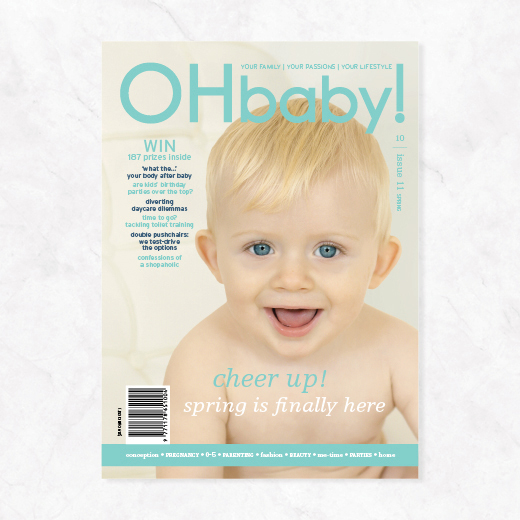
AS FEATURED IN ISSUE 11 OF OHbaby! MAGAZINE. CHECK OUT OTHER ARTICLES IN THIS ISSUE BELOW











Cookie Policy | Terms & Conditions | Privacy policy | Copyright © 2024 www.ohbaby.co.nz. All Rights reserved.