
Tips for healthy winter newborns and best temperature for baby’s room
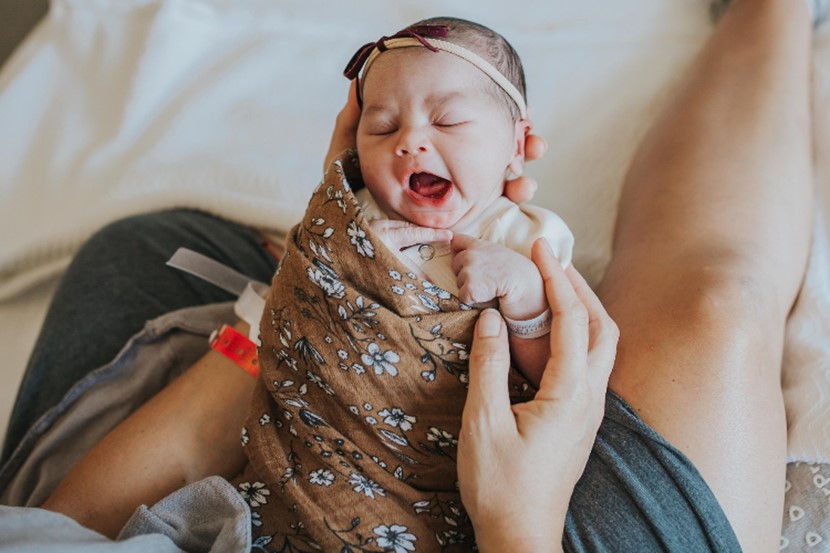
While being pregnant in winter is more comfortable than in the heights of summer, it has a downside. Taking your new baby home outside in the cold weather, and then into a home that might not be warm enough, can be worrying. Babies can’t self-regulate their temperatures, so you need to ensure your baby is warm enough.
Optimum baby room temperature in NZ
Newborns can’t regulate their own body temperature as efficiently as adults, and they are more affected by temperature fluctuations than you are. If possible, the ideal environment is a stable temperature between 16 and 20oC. The stability is important, as you can dress your baby up and down to manage the temperature, but it’s harder to do that with large fluctuations.
You may want a heater in your baby’s nursery; make sure it has a thermometer or thermostat to monitor the room temperature. You want consistency, not swinging from hot to cold.
How to dress a newborn in winter in NZ
NZ weather is incredibly varied, and it can literally change in 20 minutes when that southerly blows through. Generally, when dressing your newborn, they’ll need one more layer than you have on. A wrap or swaddle counts as one layer too. If it’s cold outside, the baby will need mittens and a hat, even if you don’t feel particularly cold.
Like in adults, layers are the key to being warm. A thin onesie, then a long sleeved shirt and pants, and then a jacket or blanket if you’re going outside. An added bonus is with all those layers, your baby looks like an adorably cute puffy bundle.
How do I know if my newborn is cold?
The easiest way to check if your baby is cold or too hot, is to feel the back of their neck, or under their clothing on their back. It’s normal for feet and hands to be cool, so they are not an accurate measure of body temperature.
How cold is too cold for a newborn baby?
You want to avoid taking your baby outside once it drops below 0oC, it becomes difficult to keep them warm enough.
What temperature is too cold for a baby room?
Inside the house, anything below 16oC is considered too cold, as they’ll need about three layers to keep them warm. Healthy homes guidelines in general recommend house temperature is over 16oC for optimum health for all occupants.
What’s the best fabric for babies to wear?
Natural fibres like bamboo, cotton and merino are important additions for your baby’s bedding and clothing. They allow the skin to breathe and help to wick moisture away from the skin. This means if they are sweating or their nappy leaks, their clothing isn’t damp and cold against their skin.
While artificial fabrics might feel warm initially, they don’t breathe very well, and can cause overheating when it’s warm, and are poor insulation when it’s cold.
How many layers should a baby wear at night?
The rule of thumb is that your baby should wear one more layer than you would if you were sleeping in that room. So if you’d be wearing light layers and a blanket, your baby will need light layers, and a heavier swaddle. In summer, they could simply need a light cotton swaddle or sleep sack, while a winter-weight Merino one is better for cool nights. Look out for TOG ratings (thermal resistance) of clothing, as this will help you decide what you need to wear.
How to dress a newborn baby in winter
- Under 16oC 3.5 TOG rated swaddle and a long sleeved onesie and footed PJ’s
- Between 16oC and 18oC 2.5 rated TOG swaddle or sleep sack and a long sleeved onesie and a long sleeved PJ top
- Between 16oC and 20oC 2.5 TOG rated swaddle or sleep sack, and a long sleeved onesie
- Over 20oC a lightweight 1.0 TOG swaddle or sleep sack and a long or short sleeved onesie.
How do I cover my newborn at night?
Generally, a onesie and a swaddle or sleep sack will be enough. If your child is a Houdini or doesn’t like being swaddled, a sleep sack is great and stops them from getting tangled up in the cot.
Remember not to use blankets until at least after 12 months of age in order to avoid asphyxiation. Also, no hats in bed, as babies cool themselves down through their heads. Also don’t use electric blankets or hot water bottles.
How can I protect my baby from winter coughs and colds?
Newborns are particularly susceptible to winter viruses, as their immune systems are immature and need time to develop. However, it is impossible to keep your baby in a bubble particularly if he or she has older siblings!
The most important thing you can do to help your baby's immunity is breastfeed the longer the better, but the first two-three months are crucial as your own antibodies pass to your baby via your breast milk, which helps their own immunity to develop. Other things you can do to help include keeping your child away from family members or friends who are unwell, keeping baby in an environment where the temperature is constant, and immunizing baby at the appropriate intervals.
What do I do if I think my baby is sick?
If you think your newborn may be unwell, have a very low threshold for taking him or her to the doctor - it is always better to have him or her checked out just in case. In general, things to watch out for include
* Fever in a baby under 6 weeks of age - the normal body temperature is from 36.4 degrees Celsius to 37.5 degrees Celsius. If your baby develops a fever greater than 37.5 degrees Celsius, take him or her to the doctor immediately as fever is very unusual in newborns, and can be a sign of an infection which needs treatment
* Coughing in a baby under 6 weeks of age - again, this is unusual in newborns and needs to be very carefully monitored
* Reduced feeding - if baby takes less than half of his or her normal feeds over a 24 hour period, take him or her to a doctor immediately as newborns can become dehydrated very quickly, and reduced feeding can be a sign of an underlying illness
* A floppy or unresponsive baby - even very young babies are responsive to stimuli around them, if you feel that your baby is sleepier than usual or isn't responding to your cues as well as he or she normally does, seek medical advice promptly.
top image: @christyhermogenes via Twenty20