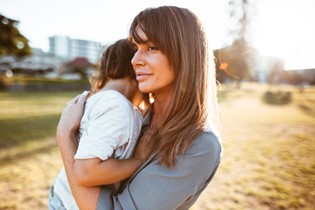


The loss of a pregnancy through stillbirth or miscarriage is devastating. Baby Loss Awareness Week takes place ever year from October 9th, ending with International Pregnancy and Infant Loss Day on October 15th. It is a time for parents and families to come together to remember babies who were part of their families for a short but significant time. Much remains unknown about the causes of miscarriage and stillbirth, and ongoing research is vital.
"I didn't know something was wrong right away," Heather Finnegan says quietly, watching the video of her 20-week scan. She and her husband Rob had made a point to take the videotape along to each of the three scans they'd had during Heather's first pregnancy three years ago. The technology of recording the ultrasound scan was relatively recent, and it was exciting for the two of them to be able to see their baby growing at eight weeks, 13 weeks, and then 20 weeks, and then take the tape home to show their families. But it was at the 20-week scan they heard the news that would change their lives forever.
"The technician kept moving the wand around and sort of 'poking' at my bump, trying to get the baby to move," Heather recalls. "When she asked me when the last time I'd felt the baby move was, I didn't know - it was my first pregnancy, and while I'd felt a few flutters from time to time, I didn't know enough to be able to discern whether they were kicks or just indigestion. As the minutes ticked by, the look on the technician's face grew more and more concerned, and finally she said she was just going to get a colleague to have a look."
"We went into the scan asking if we'd be able to find out whether the baby was a boy or a girl, and in the back of my mind I was thinking, 'Maybe she can't see the gender so she's going to get someone more experienced to give a second opinion'," adds Rob. "But when she came back in the room, she was whispering something to her colleague, and the way they huddled over the monitor gave me a sick feeling in the pit of my stomach."
Heather and Rob had never considered that they might lose their child, as the pregnancy had been healthy from the start, with no hint of complications. Heather's midwife had pronounced the baby's progress to be "perfectly normal" at her checkups, and the morning sickness Heather had experienced early on abated right on schedule at her 14th week, just as all of the pregnancy books she'd been reading said it would. By the 20th week, Heather and Rob had started decorating the baby's room and were booked in to start antenatal classes in a few weeks' time. They were looking forward to meeting other couples their own age who were also having babies, as none in their immediate circle of friends had children yet.
"I don't think I realised that there was something wrong, even when the second technician came into the scan room," Heather says. "I was impatient for the scan to continue so I could see more of my baby. But when the technician turned to me and took a long, deep breath before opening her mouth to speak, I suddenly felt like the floor had dropped out of the room."
The technician wasn't able to find a heartbeat, she told the stunned couple, and wanted them to go to hospital straightaway for a further examination. "I kept thinking, 'It's going to be all right. My baby is just sleeping.'"
Before they left, the technician took Heather's hand and told her that the baby was a boy. She then asked if they wanted to take the videotape of the scan with them - the video Heather and Rob have watched a handful of times since the loss of their baby three years ago, marking his growth and movement from eight weeks to 13 weeks, as well as the devastating stillness of that 20-week scan.
Babies born sleeping
In New Zealand each year, more than 600 babies are stillborn or die within the first 28 days of birth, and one in four pregnancies ends in miscarriage. This means that for every 1000 babies born in our country, eight will be stillborn.
An autopsy determined that Heather and Rob's baby, a son they named Gabriel, had died at around 19 weeks gestation, but the examination was unable to determine a cause of death. This is not unusual. The majority of miscarriages and stillbirths are unattributed to a specific cause. Recently, The Auckland Stillbirth Study (TASS) was set up to try to answer some of the questions surrounding third trimester stillbirth, and the contributing risk factors, with the hope of reducing the number of babies who die before they are born.
Clearly, more research is needed to find out why stillbirth is occurring, and whether there are steps parents-to-be can take to prevent it from happening, or at least lessen the chances.
"While stillbirth is deined differently around the world in terms of gestational weeks and weight, it is generally accepted to be the death of a baby in utero, prior to or during birth. The baby is born 'still', showing no signs of life," says the International Stillbirth Alliance (www.stillbirthalliance.org).
In New Zealand, the delineation between "miscarriage" and "stillbirth" occurs at the 20-week mark. Sands NZ (Stillbirth & Newborn Death Support) quotes New Zealand legislation on its website (www.sands.org.nz ), which states that a "miscarriage" is a pregnancy that ends spontaneously before 20 weeks gestation. A "stillbirth" is deined as either a deceased foetus that weighed 400g or more when born, or a foetus that was born deceased after 20 weeks gestation. Yet to have one's stillborn child "classified" and spoken about in such a clinical manner is very painful to grieving parents. As Auckland midwife and TASS coordinator Tomasina Stacey says, "Stillbirths are classiied in a number of different ways depending on the stage of pregnancy at which they occur. Some classification is useful in order to make comparisons, but on an emotional level it can be quite unhelpful, and in fact can cause pain and distress at times. The size of the life does not equate to the grief. Regardless of when the birth/death occurred, this is still someone's child."
Support for parents
The loss of a baby through miscarriage, stillbirth, or medical termination is still a taboo subject in our society. Family and friends of parents who have lost a baby may not know what to say or do, and often feel uncomfortable offering support. Society frowns on those who express grief - for some reason, it's seen as better to "keep a stiff upper lip" and try to "move forward" as quickly as possible. But experiencing the death of a baby or child is never easy, and it's important for grieving parents to take the time that they need to cope with the loss of their baby in their own way, with as much support as their friends and family members can give to them.
"I felt so alone," recalls Heather. "My baby had died and instead of preparing for his arrival home, I was left with an empty nursery and felt at a complete loss as to what to do next."
Heather delivered Gabriel the same day as the scan where they discovered his death, opting for a vaginal birth despite initially wanting a Caesarean section. A vaginal birth is the preferred method of delivery for stillborn babies, as it reduces the risk of complications in subsequent pregnancies, but for Heather and Rob, it was a heartbreaking experience.
"I still had to go through labour and birth, which was incredibly painful on so many levels - physically, yes, but also emotionally, because there was not a 'reward' at the end of the labour," Heather remembers. "I knew that once Gabriel was born - once he was actually outside my body - our dreams of his life would be over."
After Gabriel's arrival, Heather was referred to Sands and The Lost Ones (a New Zealand website dedicated to supporting parents and families who have experienced miscarriage, stillbirth and newborn death) for emotional support, but it took her several weeks to feel comfortable opening up to others about what had happened. "When you have a baby, people congratulate you, bring you flowers and casseroles, and shower you with presents. But when your baby is stillborn, people don't know how to help you. They are sad for you, of course, but they tend to shy away from talking about the baby or what you're going through."
Rob felt even more marginalised, as most of the support available concentrates on grieving mothers, not fathers. Two days after Gabriel's birth, he returned to work, a decision he admits, in hindsight, was not appropriate considering the circumstances.
"I was completely shattered," he says. "There were so many things going on emotionally and I didn't give myself time to process any of it. I felt like everyone expected me to be strong for Heather, but inside, I was totally torn up."
Three years on, Heather and Rob have had a second child, Amber, who was born in April of this year. "We spent this pregnancy on pins and needles," says Heather. "I was petrified about everything, whereas with my pregnancy with Gabriel, I felt completely at ease the entire time. Even a few weeks after she was born, we'd look at each other and say, 'I can't believe she's here.' The loss of Gabriel has hit us very hard."
A few weeks ago, Rob and Heather held a naming ceremony for Amber, and a memorial service for Gabriel at the same time. "We wanted it to be a celebration of his presence in our lives, and we wanted to acknowledge that he was with us, that he was alive for a while before he was born," says Rob.
During the ceremony, they buried Amber and Gabriel's placentas along with Gabriel's ashes under a tree on Rob's parents' farm. "People were crying and laughing at the same time. It was a bittersweet occasion. But we finally felt like we could talk about it and come to terms with Gabriel's death," Rob continues.
"After the ceremony, one of my aunts approached me and took me aside. She told me, through tears, that when she was first married she had also given birth to a stillborn baby. This was 35 years ago, and only a few people in the family had ever known about it. She hadn't named her baby, and there was no funeral or anything - the hospital simply disposed of its body, and she was told that it was for the best. She didn't even know if the baby was a boy or a girl." Rob pauses to compose himself, then continues. "She said she thought it was very brave of us to bring our experience out into the open. She literally had not spoken about her child's death in 35 years. Heather and I think that is tragic."
"Losing a baby is a tragedy," Heather agrees. "But what's even worse is feeling like you're alone and can't talk about it. I'm grateful that Sands and The Lost Ones are there for people like us to reach out to. Stillbirth is tragic, and we need to talk about it, and try to understand it, in order to be able to find meaning in the experience of losing a child."
• Stillbirth & Newborn Death Support www.sands.org.nz
• The Lost Ones www.thelostones.co.nz
• Miscarriage Support www.miscarriagesupport.org.nz

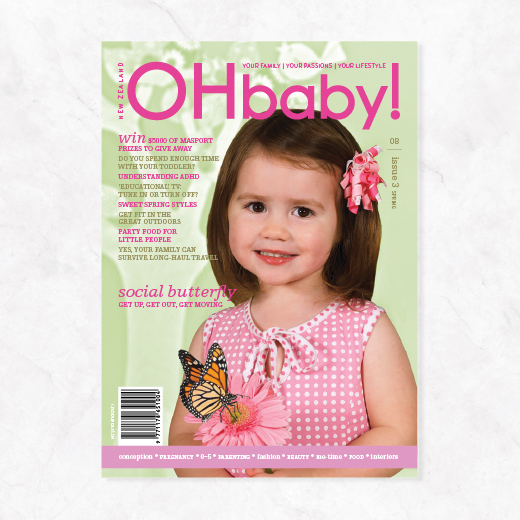
AS FEATURED IN ISSUE 3 OF OHbaby! MAGAZINE. CHECK OUT OTHER ARTICLES IN THIS ISSUE BELOW





Cookie Policy | Terms & Conditions | Privacy policy | Copyright © 2024 www.ohbaby.co.nz. All Rights reserved.