
Two for the price of one
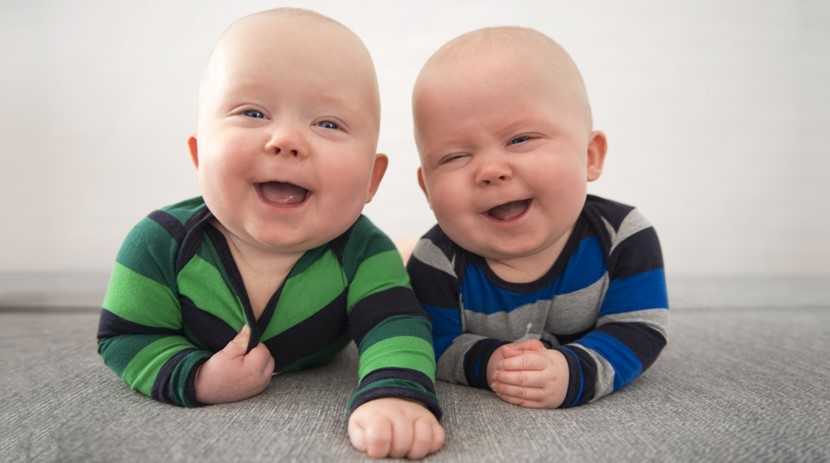
For most people, finding out they are expecting twins comes as something of a shock, with plenty of things to consider. Twice as nice, but also twice the preparation - two cots, two car seats, two sets of clothes, and only half as much sleep!
Expected or not, every year in New Zealand close to 1000 couples find themselves expecting twins, triplets or occasionally even higher order multiples. And whilst twins may be double, the joy, they can also be double the trouble with pregnancy complications and early delivery to consider.
According to Dr Anil Sharma, an obstetrician and gynaecologist in Auckland who specialises in high risk pregnancies, the biggest risk in twin pregnancies is the risk of premature delivery. "Around forty percent of twins are born prematurely, compared with five percent of singletons, and there can be health problems associated with that," he says.
Twins also tend to be smaller at birth, partly because they are usually born earlier, but Dr Sharma says this can also be due to problems with the placenta, particularly in monochorionic twin pregnancies where the twins share a placenta.
Other risks in a twin pregnancy include an increased incidence of toxemia and gestational diabetes, twice the rate of miscarriage of one or both babies compared to a singleton pregnancy, and increased complications with delivery such as the need for a caesarian section, forceps or ventouse delivery, and a higher risk of postpartum hemorrhage.
Twin pregnancies are monitored frequently by ultrasound to make sure they were growing well and that their placentas were functioning well. Dr Sharma recommends routine ultrasounds every 4 weeks from around 20 weeks for dichorionic twins (where both babies have separate placentas) and fortnightly from around 22 weeks for monochorionic twins.
The optimum time for delivery of twins is around 37-38 weeks, although around half will be born earlier than this because of premature labor or the need for intervention on medical grounds such as toxemia or twin to twin transfusion syndrome. If the babies are not born before 37 weeks, Dr Sharma says it is wise to begin considering delivery as the placenta begins to function less well after 38 weeks.
"If the first baby is presenting head first, and there are no other complicating factors, I usually recommend attempting a vaginal delivery," says Dr Sharma. However, a large number of twins are born by caesarian section, either because the leading twin isn't presenting favorably, because of complications in the pregnancy or because one or both babies become distressed during labor.
The reality of twins is overwhelming for Michelle Walmsley: when her fraternal twins are born later this year, her daughter Sienna will be not quite two. "It is a little frightening," she says. "Sometimes I sit there and cry, I wonder about the impact it's going to have on our lives, but we're trying to get everything prepared so that things go as smoothly as possible."
Because she also has another child who will be under 5 when the twins are born, Michelle and her husband Noel will qualify for up to 250 hours of subsidized home help through Work and Income New Zealand. This subsidy isn't means tested, and can be used in a number of ways. Michelle and Noel are planning to get a nanny in for 6 hours a day, 3 days a week to help share the load, and they are also going to be calling on friends and family for support.
Michelle found the morning sickness early on to be difficult to cope with, but other than that she says her twin pregnancy has been little different to her pregnancy with Sienna.
"My tummy is expanding faster, and I am more tired," she says, "but I just put the tiredness down to running around after a 16-month old all day!"
Dr Sharma says that while bed rest is often used towards the end of twin pregnancies, there is no reason for women to stop their usual daily activities during a twin pregnancy.
"I generally advise all women to take some time for themselves during early pregnancy," he says, "even if they're only having one baby. I'd definitely tell them to slow down if they are overworked and exhausted, but otherwise it's good to keep active."
Michelle is hoping that keeping active throughout her pregnancy will help her to avoid complications later on, and that she will be able to avoid a caesarian. If her babies are born before 34 weeks, Michelle will have to travel to Waikato hospital as her local hospital isn't equipped to cope with very premature babies, so she has her fingers crossed that her twins will hold on until close to their due date.
"I don't think Sienna really understands the whole thing," says Michelle. "We've shown her the scan pictures, and she points to them and says 'bubba', but I think she's too young, we'll probably have to wait until the babies are born before it becomes real to her." Michelle is planning to have a small gift for Sienna from each of her new siblings, and for Sienna to give them a small gift to help with the bonding process.
"I do worry about how Sienna will adapt," Michelle says. "I also find that whenever anyone finds out you are having twins, they give you that look of pity that says, 'thank God its not me', or they ask you stupid questions like, 'was it planned?' Umm, hello! You can't plan having twins!"
Useful advice from mothers with twins on our message boards has been consistent with the theme of being organised.
"Be organized. I know everyone says that, but it's the best advice I've been given," says Emma. "If you don't have a routine, your day is hectic. All of my time is used up with feeding the girls, and just getting through the day."
For Emma, this has been the hardest part of the whole experience. She's found bonding with her girls difficult as she's had to focus on practical things and hasn't had time to just sit and get to know her babies. But this is improving as the girls get older, and seeing mums of older twins gives Emma reassurance that things will get easier.
So what makes it all worth it? For Michelle, its feeling her babies kicking in her belly, for Emma, it's watching her daughters as they begin to interact with each other and discover the world around them.
"Twins are hard work," says Emma. "I'd be lying if I said they aren't. But they truly are a blessing, and I feel very lucky to have been chosen to be their mum."