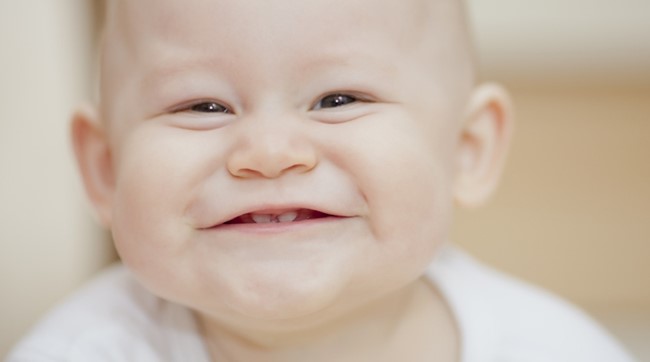
Teeth and teething
6 MONTHS OLD
When a baby gets their first tooth varies from baby to baby,
but it will nearly always be one of the front bottom teeth.
If your baby develops teeth before this, or after 6 months, it
will be completely normal and nothing to worry about. Teething
should not cause your baby a lot of distress, you may notice a
slightly inflamed gum and your baby will want to chew on their gum
or your finger more.
In the past some parents have interpreted teething for illness
and delayed taking their baby to the doctor. Teething does not
cause vomiting or severe pain.
Just because your baby does not have teeth at the back it does
not mean that he/she isn't chewing. Babies chew with their gums and
this is practice for when they grow back teeth. Make sure you give
your baby things to chew (raw carrot) even when they don't have
their back teeth, otherwise he/she will be reluctant to eat solids
when the time comes.
Should I let my baby feed him/her self?
Yes, it will make them feel independent. However there
are many dangers such as choking and poking themselves in the eye,
so stay close by.
Is it good for my baby to chew on things?
Yes, it helps their jaw develop and prepares them for
when they do develop back teeth.
What will it look like when a tooth comes
through?
Small, pale bump under the baby's gum.
6 MONTHS TO ONE YEAR OLD
Durning this time some babies will develop a lot of teeth, others
will not, both are normal.
The pattern in which teeth usually appear
* 6 months bottom front
* 6 months next to bottom front
* 7 months top front then the one next to that
* 8 months all four top front
*10 months all four top front, all four bottom front
*1 year old one molar at the back
· If your baby has several teeth coming through there may be
some discomfort, so a teething toy filled with a gel like substance
may be comforting.
· The teeth at the front do not cause as much discomfort as the
back molars due to their shape.
· It is unadvisable to use gels and creams on the teeth as they
often contain sugar or medicine. Instead just rub your finger on
the sore gum.
· If your baby has teeth on the bottom you do not need to give
up breast feeding. It is only when the matching pair on the top
arrive that there may be issues with biting.
· The manner in which you care for these first teeth is vital as
it is these teeth that lay the path for the next set. Clean the
teeth twice daily with a small, soft brush and a small amount of
childrens tooth paste. This will be difficult and there may be some
resistance but don't give up completely and work in compromise with
your baby.
· Fluoride is important to your baby just as it was important to
you during pregnancy. However, too much fluoride can be harmful.
Sometimes fluoride occurs naturally in drinking water, in some
places it is added to public water supplies. Find out if there is
fluoride in your babies diet and monitor its quantity. You may have
to suppliment it with fluoride drops or a fluoride tooth paste.
· Give your baby water as opposed to fruit juice. Fruit juice
naturally contains sugar and more than one cupful a day is too
much. Encourage your baby to prefer savoury over sweet, your not
only teaching good habits for life you are also doing the teeth a
big favour as well.