

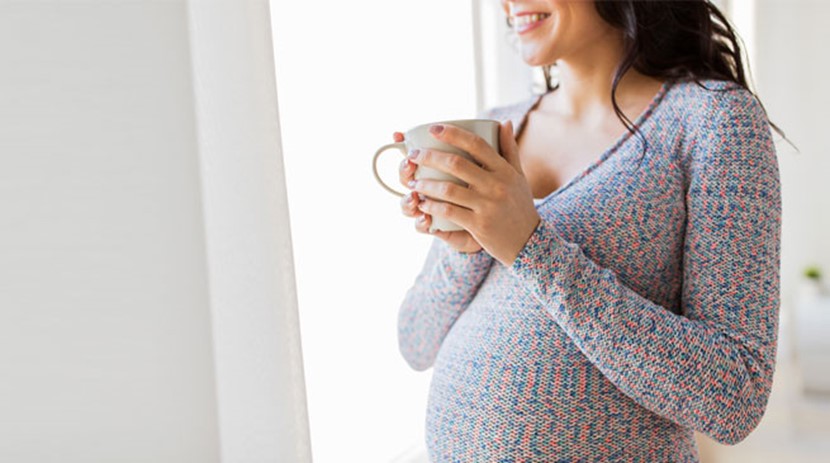
Would you drink two cups of tea a day if you thought it could shorten your labour? Dr Melanie Woodfield investigates raspberry-leaf tea to try to find out whether it lives up to the hype.
Both prior to and during pregnancy, many women use dietary supplements to enhance their health and wellbeing, and that of their unborn child. In an Australian study by Maats and Crowther, over 200 women were interviewed about their use of vitamins, minerals, and herbal supplements during pregnancy.
The majority (62%) used some form of supplementation. Folate (70%), iron (38%) and multivitamins (27%) were the vitamin and mineral supplements most frequently taken by pregnant women. Ginger (20%) and raspberry leaf (9%) were the most frequently used herbal preparations.
Raspberry-leaf products have often been touted as being able to make labour shorter and easier, and many women take these supplements "just in case" they work. Is this simply a result of the placebo effect (thinking that something works ends up making it work), or is there a scientific basis?
Rather than asking friends and family whether raspberry leaf worked for them, it's often more fruitful to look at scientific studies published in reputable journals to determine the effectiveness of a product. Unfortunately, there have been only a handful of studies published since 1941 on the effect of raspberry-leaf extract on labour. This isn't necessarily because it doesn't work - political and funding issues can mean that studies of natural remedies aren't published as readily as other studies.
In 1941, two studies were carried out in laboratories (one on cats, and one on women!). These studies, by Burn and Withell and their colleague Whitehouse respectively, suggested that raspberry-leaf extract could relax the muscles of the uterus and generally produce more coordinated contractions during labour. The research activity then appears to have gone quiet until in 1999, when Myra parsons (a midwife in Australia) and her colleagues set out to look at the safety and effectiveness of raspberry-leaf products by looking back at a group of 108 mothers who had given birth at a particular hospital in 1998. They compared those women who had chosen to take raspberry-leaf products (57 women) with those who hadn't (51 women) and asked them to complete a questionnaire about their labour experiences.
The study made some encouraging claims - that raspberry-leaf products could shorten labour with no identified side-effects for mums or babies. The authors also suggested that raspberry-leaf products might lessen the chance of premature or overdue births, and reduce the likelihood of the need for artificial membrane rupture (breaking the waters), caesarean, forceps, or otherwise assisted births.
Big claims! On the face of results like these, it might be tempting to start slurping the tea by the bucketful. However, there is a need for caution when interpreting these results. The authors themselves point out that because the study was retrospective (looking back), they were not able to regulate or control lots of factors that could have influenced the results, such as timing and amount of the raspberry-leaf products taken. It may have been that those women who chose to take raspberry-leaf products were also doing other things, or taking other supplements that may have produced the effect. Also, mums self-reporting labour experiences using a questionnaire is not as scientifically rigorous as an independent researcher making observations - labour can seem much longer to the person experiencing it!
Taking these issues into account, Parsons got together with a few other colleagues in 2001 and carried out another study into the safety and effectiveness of raspberry-leaf products. This time, they randomly assigned 192 women to one of two groups without letting the women or the experimenters know which group was which.
One group was given a tablet containing active raspberry-leaf ingredients from 32 weeks gestation, and the other was given an identical tablet which was a placebo, containing no active ingredients at all. The researchers then collected data from the hospital database on such factors as age, length of labour, baby gestation at birth, blood loss, anaesthetic use, and maternal blood pressure. The two groups were then compared to determine whether the raspberry-leaf tablets had any effect.
The authors concluded that the raspberry-leaf tablets caused no adverse effects for mother or baby. But, contrary to popular belief, the tablets did not shorten the first stage of labour. The only statistically significant findings were that the raspberry-leaf tablets seemed to shorten the second stage of labour (the pushing part), by about 10 minutes, on average, and there was a lower rate of forceps deliveries in the group of mums who received the raspberry-leaf tablets (19.3% in that group, versus 30.4% in the other group). The authors note that the dosage used in the study (2.4g of extract per day) was "conservative" and wondered whether even better results may have been achieved with a higher dose.
This study appears to be one of the only scientifically rigorous examinations of the safety and effectiveness of raspberry leaf products during pregnancy. Concerns have been expressed that raspberry-leaf products can lead to miscarriage or premature labour, and side effects can include diarrhoea, low blood sugar, and possibly stronger Braxton Hicks contractions.
Until more research has been carried out to substantiate the work of the Australian researchers, the jury is still out on how safe and effective raspberry-leaf products actually are during pregnancy. As always, it's best to exercise caution and use products in moderation. If concerned, stop taking the products and consult with your LMC or doctor.

Dr Melanie Woodfield is a child and adolescent clinical psychologist in Auckland. Despite popular sentiment, Melanie found raspberry leaf tea to be quite palatable enjoyed with honey, but is not convinced that it helped with the birth of her own son.
References
• Burn, JH and Withell, ER. "A principle in raspberry leaves which relaxes
uterine muscle." Lancet 5 (1941): 1-3.
• Maats FH and Crowther CA. "Patterns of vitamin, mineral and herbal supplement use prior to and during pregnancy." Australian and New Zealand Journal of Obstetrics and Gynaecology 42.5 (nov 2002): 494-6.
• Parsons, M, Simpson, M, and Ponton, T. "Raspberry leaf and its effect
on labour : Safety and efficacy. " Australian College of Midwives Incorporated Journal 12.3 (1999): 20-5.
• Simpson, M, Parsons, M, Greenwood, J, and Wade, K. "Raspberry leaf in pregnancy: Its safety and efficacy in labor." Journal of Midwifery and Women's Health 46.2 (2001): 51-9.
• Whitehouse, B. "Fragarine: an inhibitor of uterine action." British Medical Journal 13 (1941): 370-71.

AS FEATURED IN ISSUE 4 OF OHbaby! MAGAZINE. CHECK OUT OTHER ARTICLES IN THIS ISSUE BELOW












Cookie Policy | Terms & Conditions | Privacy policy | Copyright © 2024 www.ohbaby.co.nz. All Rights reserved.