

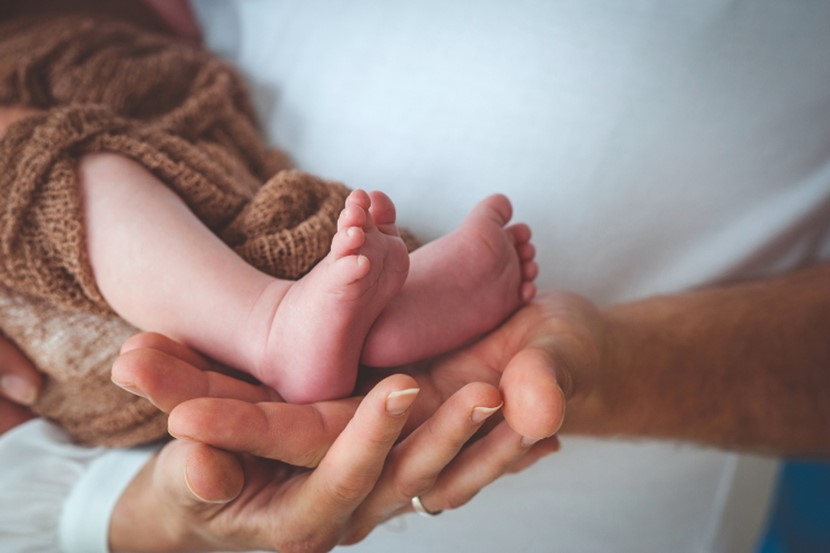
Ever hear the phrase 'skin as soft as a baby's'? As the parent of a newborn, you may be wondering when, exactly, this lizard-skinned little creature's body is going to soften up. Sadie Morgan investigates infant skin conditions and finds out what treatment options exist to help your baby's skin go from scaly to smooth.
When a child enters the world, his skin is usually smooth and soft, with an almost velvety texture. For the first week or so, your newborn's skin may feel a little bit greasy as he sheds the vernix that he was covered in at birth. Vernix is a curdlike, waxy, whitish substance that is secreted by the baby's sebaceous glands while it's still in the uterus. It may be ugly, but it serves a very important function: To protect the baby's skin from the amniotic fluid that surrounds it. Without vernix, your baby's skin would become wrinkled like a raisin - the same thing that happens when you soak in the tub for too long and your fingers and toes start to resemble dried fruit. Research has also suggested that vernix has antibacterial properties and helps protect the baby from infections.
Your newborn baby has spent 40 weeks inside a warm, moist environment perfectly suited to his growth and development, so it's only natural that when he emerges, some changes need to take place as his body adjusts to the environment of his new habitat. From the time newborns enter the world, their skin is in a state of flux, trying to adjust to atmospheric conditions so different to what they face in the womb. Once the vernix is either shed or absorbed into the skin, your newborn's silky skin may start to develop some not-so-nice characteristics. Cradle cap, dry and flaky skin, "baby acne", and other skin-related conditions look awful and can be uncomfortable.
Because infant skin is so changeable, you need to treat it differently to your own, adult skin. Your fantastic anti-ageing moisturiser is definitely not appropriate for your little one. Infant skin is more vulnerable to irritants, changes in temperature, humidity, and other external factors. It has not yet developed protection against potential irritants like washing powder or scratchy fabric.
So your task as a parent is to treat your infant's skin gently and mildly. But first, let's answer some basic questions: What the heck is wrong with my baby's skin? How do I know if it's dry skin, eczema, or something worse? And what can I do about it?
What's wrong with my baby's skin?
Newborns can experience a variety of skin-related conditions. In fact, because a newborn's skin is so thin and sensitive, they can often experience more skin-related problems than adults do! Here are some of the most common infant skin conditions your baby may develop:
• Cradle cap
If your baby looks like he has dandruff (a flaky scalp), it's probably cradle cap (also known as neonatal seborrhoeic dermatitis). Cradle cap can be white and flaky, resembling dry skin, or it can be yellow, greasy, and crusty - and innumerable variations thereof. It's ugly, but fortunately it's harmless to your baby. Cradle cap usually shows up within the first few weeks to months of your baby's life and can be very hard to deal with as it often emerges just when your newborn's hair finally decides to start growing more than just peach fuzz. There's no known cause for cradle cap, although some researchers have suggested it's a result of the end-of-pregnancy hormone dose the baby receives from its mother overstimulating the baby's oil-producing sebaceous glands (the same place vernix comes from). The jury is still out on this one, so don't start blaming yourself, Mum! There is also recent research suggesting that a particular strain of yeast may cause the infection of the scalp, but this is uncertain. It may also be related to a lack of biotin (vitamin H or B7). We do know that cradle cap isn't caused by allergies or not bathing your baby enough, and it's not contagious.
• Baby acne
Does your baby's skin make him look like he's in the throes of puberty, with zits sprouting everywhere? This is likely to be "baby acne" (also called acne neonatorum). Baby acne affects about 20% of newborns, and usually shows up at around their second week of life. Fortunately, most cases of baby acne resolve themselves by the time the baby is three months old. But it can make getting those gorgeous baby pictures a bit challenging! Baby acne is also thought to be related to the mother's hormones overstimulating the sebaceous glands, which cause the oil glands on the baby's skin to form pimple-like bumps. Recent research points to a variety of yeast that may cause an acne-like skin infection in infants, but further study is needed. Baby acne is usually confined to the cheeks and face, but can also appear on the baby's back and shoulders near the neck.
• Milia
If your baby has tiny white bumps on his eyelids or nose, these are probably milia (also called milk spots). They look like little seeds and are actually benign, keratin-filled cysts that appear just under the epidermis (outermost layer of skin). Milia are harmless and usually disappear on their own within a month.
• Dry skin
Dry skin in infants is common, especially in the winter months where exposure to the extremes of temperature (cold outdoors and warm inside) combine to dehydrate their sensitive skin. We spend so much of our time trying to keep our babies warm and dry that we're actually putting them at risk of developing dry skin. When moisture is consistently drawn away from the skin, the stratum corneum (outermost layer of the epidermis) eventually develops cracks, which increases the risk of irritants penetrating the skin. Even when we bathe our babies, their skin gets dehydrated because as the water dries from the skin, it draws out natural lipids which maintain the skin's natural moisture barrier and cause dryness. Wiping or towelling skin dry, especially with baby wipes, can further damage the skin.
• Infant eczema
Infant eczema (also called atopic dermatitis) is characterized by reddened, crusty, itchy skin. In babies, it's hard to stop them from scratching, which can make the condition much worse as it further irritates the already fragile skin and can introduce secondary infections. Infant eczema is an inflammation of the upper layers of the skin. It is believed to run in families whose members are also prone to hay fever, asthma, or eczema themselves. Eczema usually shows up on the face, scalp, neck, chest, inside of elbows, underarms, behind the knees, and on the buttocks. It usually develops around two to three months of age, and is caused by an oversensitive immune system reaction in the skin.
What's a parent to do?
Many common infant skin 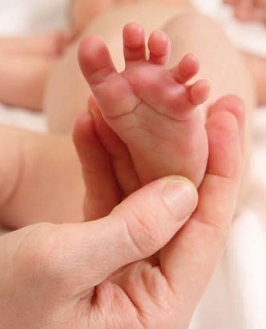 conditions will eventually resolve themselves, although this is incredibly frustrating to new parents who want their infant to look and feel better as soon as possible. But there are remedies you can try to reduce the length of time your baby is suffering, and speed up the healing process.
• For cradle cap, many parents like to try various methods to remove the scales. A favourite method is to coat the scalp in olive or almond oil, slip a cotton hat on overnight, and brush off the softened scales in the morning with a soft toothbrush or baby hairbrush. While this can provide short-term results, the scales usually don't all go at once, so you may find yourself repeating the process more than once - or just leaving the hat on all the time until the scales do finally disappear. If the cradle cap is stubbornly refusing to go after several months or the scalp has become very red and irritated, talk to your child's GP.
• Baby acne is best treated with patience and a "less is more" approach. With baby acne, you should avoid putting creams, oils, or lotions on your baby's skin, as these can clog pores and make the acne worse. Baby acne isn't caused by dirt, so be careful not to scrub your baby's face. Wash with mild soap and water once a day, and pat dry with a facecloth. It should disappear within a few months of its own volition, and meanwhile, it shouldn't bother your baby.
• Milia also require no medical treatment, and should go away on their own within a few weeks of the baby's birth.
• Dry skin is a bit trickier to deal with. If you've noticed that your baby's skin feels dry, use a gentle cleansing product with a neutral pH level, and add a few drops of bath oil to his bath. After bathing, moisturise with baby lotion or baby oil. Moisturisers are essential for treating dry skin because they provide a barrier that keeps moisture in the skin from evaporating. Infant skin is very thin, which means it doesn't hold moisture as well as adult skin does. Increase your baby's intake of fluids, and if you're noticing that your baby's skin feels extremely dry or is beginning to get irritated, make sure you see your GP.
Treating infant eczema
Infant eczema is such a big issue, its treatment options deserve a separate section! Unfortunately, there isn't a known cure for eczema, so the goal of most parents and medical practitioners is to find a treatment that helps the sufferer to relieve itching, and reduce inflammation. There are lots of things you can do to help prevent eczema from getting worse and promote healing:
•Dress your baby in natural fibres. Cotton or silk are best, as synthetic fabrics and wool can irritate the skin. Use cotton sheets and blankets on your baby's bed.
• Change your washing powder. Eczema can be irritated by too harsh a laundry detergent being used for clothing and bedding, so try something gentle and natural.
• Skip the bubble bath, and watch the temperature. Bathe your child in a pH-neutral cleanser only if it is necessary to remove actual dirt; otherwise, stick to plain water, and make it lukewarm, not hot.
• Help your child to avoid scratching. Invest in some scratch mitts (widely available from baby clothing stores), or slip a pair of socks over their hands and arms to discourage scratching. Keep their fingernails short.
• Use a humidifier in your baby's room to counteract the drying effects of using heaters.
• Dust. Keeping the house as dust-free as possible can help to reduce eczema, as lack of dust mite and particle allergens reduces the immune response.
• Breastfeeding your baby exclusively until at least four months of age can help minimize eczema. But if your baby has eczema already, look at your diet if you're breastfeeding, and your baby's diet if he's on solids. There is research suggesting that sensitivity to certain foods can cause eczema to flare up, including cow's milk, wheat, eggs, soy products, nuts, and coffee. If you're introducing solids, make sure you only introduce one food at a time and watch carefully for reactions that manifest as eczema.
• Moisturise. Many parents swear by emollient creams such as aqueous cream, and paw paw ointment. Bathing in a colloidal oatmeal bath may also help the skin to retain moisture. Apply moisturisers to the skin directly after bathing to "lock in" as much moisture as possible. Patch-test moisturisers on a small area of your baby's skin until you're sure that he won't have a negative reaction to it.
• If you're worried, don't hesitate to visit your child's GP. Sometimes, severe eczema may need medical treatment, although your doctor will likely suggest many of the remedies recommended here before resorting to medication.
Fortunately, most infant skin conditions will resolve themselves within a couple of months, as their hormones settle down and their immune systems sort themselves out. Then you can really enjoy that baby-soft skin, and book in for a photo shoot without fear that you'll need to pay extra for retouching!
| Sadie Morgan is a freelance writer based in Auckland. She is a mum of six children, three boys and three girls, and has a collie named King. |

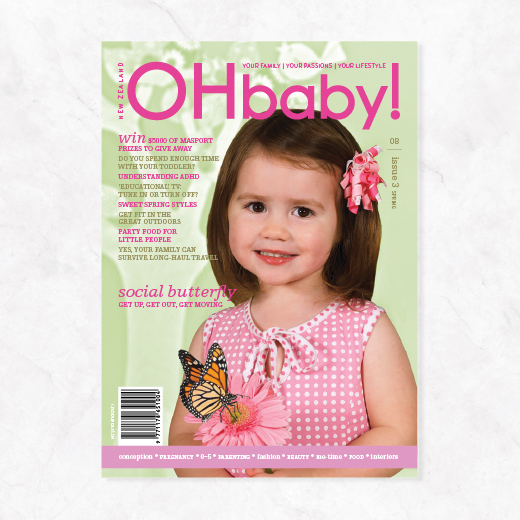
AS FEATURED IN ISSUE 3 OF OHbaby! MAGAZINE. CHECK OUT OTHER ARTICLES IN THIS ISSUE BELOW










Cookie Policy | Terms & Conditions | Privacy policy | Copyright © 2024 www.ohbaby.co.nz. All Rights reserved.