Read up — but don’t overdo it. Most mums-to-be devour every single pregnancy book, magazine, pamphlet, and website they can find, but instead of equipping themselves with knowledge, they end up overwhelmed and confused — and disempowered by too much information that doesn’t necessarily mesh with what they believe or want. Limit your reading material to those things that resonate with your own values and experiences, and discard the rest.


Are you pregnant and worried that your labour and birth won't turn out the way you hope? It's your body and your choice - so empower yourself to have a good birth.
Like most first-time parents-to-be, my husband and I dutifully signed up for antenatal classes when I was pregnant with our daughter. At our first class, right after the introductions, we were divided into two groups - one of mums and one of dads - and handed piles of index cards with phrases written on them. The phrases represented the "typical" stages of labour, and our job was to put them in order, from "bloody show" and "waters break" right through to "placenta is delivered".
I don't remember which gender prevailed at that task. What I do remember is one of the other heavily pregnant mums-to-be splayed on the floor next to me as we shifted cards around, muttering to herself, "Like it's really going to follow a schedule!"
Here's the thing - no matter how prepared we think we are, childbirth rarely follows the "textbook" examples to the letter. Even the midwife who was teaching our antenatal class admitted that our index-card exercise was intended as more of an icebreaker than a lesson. The reality is, when you're a first-time mum, you won't know what to expect from labour and childbirth. Because it's a different experience for everyone, the only way to know what it will be like is to go through it.
However, that doesn't absolve you from preparing yourself, in the most positive and introspective way possible, for your birth experience. Because it would be just plain silly to go into childbirth blindly, completely ignorant of what's going on within your body. And if your thoughts and efforts are turned toward having a good birth, it's more likely that the outcome will be one that you can embrace and celebrate, even if it doesn't go entirely the way you - or the textbooks - envision.
What is a "good birth"?
The definition of the phrase "good birth" is intensely personal. For me, a good birth meant my child and I made it through, healthy and alive - I didn't really care how. For one of my friends, a good birth meant one in which she didn't have any medical intervention, including pain relief. For another friend, a good birth for her second baby meant delivering vaginally rather than by emergency c-section, which is how her first child came into the world. For one of my colleagues, a good birth is one in which she gets an epidural, pronto, to minimise her pain as much as possible.
In general, a good birth is one in which you, the labouring mother-to-be, feels safe, secure, and confident in what is going on, whether you are labouring naturally or whether you are undergoing medical intervention such as a forceps-assisted birth or a c-section. You also need to be confident in the people who are taking care of you and supporting you through your birth.
"You need to feel emotionally safe with the people who are attending you at your child's birth," explains Dr Sarah Buckley, author of Gentle Birth, Gentle Mothering: A Doctor's Guide to Natural Childbirth and Gentle Early Parenting Choices. "An ideal environment for labour is when you've already thought ahead to your labour and birth and you've taken steps to ensure that you can feel private, safe, and unobserved."
It's important to define what a good birth is in your eyes. This is where it gets tricky, though, as birth is something that, to a degree, you can only prepare for in the abstract. There are no "trial runs" when it comes to labour and childbirth - so much of the preparation you do needs to be of the mental variety, and when you have no context for what's going to happen to you, this can seem like an impossibility.
First, know thyself
No wonder we're scared of and confused about childbirth - not only have we never experienced it, we've more than likely never seen someone else experience it, or even been around very many other pregnant women in our lifetimes. Movies and TV present birth in a certain rose-hued light which is nowhere near the reality we experience. The changes your body undergoes are unlike anything you've ever experienced before. And in our society, it's not considered socially acceptable to mention the fact that your nipples are getting darker and more sensitive, or to talk about the hair now growing on your stomach.
Get to know your body. If you've never done so before, now is the time to become intimately familiar with yourself. Pay attention to what's going on inside, from heartburn to aching back to swollen ankles to sore cervix. Look at and feel the changes that are going on - don't just hide underneath billowy maternity clothing. Check yourself out in the mirror. Embrace the incredible time period that is pregnancy, and be gentle with yourself. You have been created to nurture and sustain another human being, and this does not mean that you should continue your life as it was before you got pregnant. You need to listen to what your body is telling you, whether it's tired or sore or stressed, and take care of yourself. Don't ignore those feelings, and don't be ashamed of them. In a society that places an inordinately high value on superwomen, you need to decide what level of activity you are really comfortable with, and place a premium on bonding with your unborn child through paying close attention to what is happening within.
"You need to create the space for that shift of thinking," explains Dr Buckley. "Humans have been hardwired through evolution to know what is going on in our bodies and to trust our instincts. Claim your body. Have a feel. Poke around. You and your unborn baby are constantly passing physiological information to one another, about the state of your emotions, your physical comfort, your stress level, etc. Set aside the time to relax and tune in with what's going on in there."
Slow down
What was your gut reaction when you first learned you were pregnant? Were you excited, frightened, dazed, unbelieving, quietly pleased? Pregnancy is an emotional roller-coaster. Your feelings will change a lot over the course of your pregnancy, and there are no "right" or "wrong" things to feel. Many women start off pregnancy feeling absolutely thrilled, then plunge into despair when morning sickness starts to take its toll, then get frustrated when they realise they can't eat some of their favourite foods or take their normal medications when they're not feeling well. When morning sickness fnally stops, they might feel elated again, until nearing the end of the third trimester when they're uncomfortable, can't find anything to wear, and no longer fit behind the steering wheel.
"Gestation is a full-time job, and you need to trust your instincts," says Dr Buckley. "take advantage of things that make you feel relaxed. If something stresses you out, don't do it. If you go along to antenatal classes and they make you feel anxious, then don't go to them any more. If you're reading a pregnancy book and it's upsetting you, stop reading it. Seek out activities and support that helps you feel relaxed, calm, and confident."
It's also important to take it slowly. "In preparing for birth and your mothering years, you need to slow down. Accept help from other people. Do yoga. Tune in and get in touch with your body," reiterates Dr Buckley. "And accept help from others when it's offered."
Gather the good stuff
Many pregnant women read birth stories in an effort to prepare themselves for labour, but they are not always the most helpful. "I suggest that pregnant women protect themselves from horror stories," Dr Buckley explains. "Be aware of what you are hearing, and change the subject if you need to.
"There is a lot of birth trauma in our culture because pregnant women are not always treated properly, and this will come out in the birth stories that women tell and write. Because your personal boundaries will be blurred when you're pregnant, and your developing relationship with your baby will be vulnerable, you need to be honest with yourself - read a wide variety of birth stories, but protect your own emotional wellbeing."
Birth plans are an area where a pregnant woman can really take the time to think through what she wants from her birth, write it down on paper, and communicate it to her caregivers. "Birth plans are useful for thinking through various possibilities, and the act of formulating a plan is very useful," says Dr Buckley. Birth plans give you a measure of control over your experience, but it's important to be flexible. Would you prefer to plan out all of the eventualities - scenarios A, B, C and so on - or go with the flow? Decide what you are comfortable with. And make sure that you find out from your caregiver what will happen if things don't go according to your birth plan, so that you can revise it and be comfortable with the changes ahead of time.
I made the mistake of having a birth plan that was too flexible - I didn't think about what I wanted from labour (I was in denial!), but decided to go with the flow. In hindsight, I now know that if I have another child, one of the things I will think about and put in my birth plan is my views about pain relief. I didn't realise how much I wanted an epidural until it was too late for me to have one. So next time, I'll make sure that this is something discussed up-front. Decide what parts of your birth experience are most important to you, and make sure it's clear to your caregiver.
"Pregnancy brings with it a lot of changes and challenges," concludes Dr Buckley. "But Mother Nature is going out of her way to make sure you enjoy it. Look at your life, and set yourself up for an enjoyable, intuitive pregnancy - you only get one chance at each pregnancy, so this is important." And what follows naturally from an enjoyable, relaxed, intuitive, "good" pregnancy is a labour that you can cope with in a positive, thoughtful, joyful way - even when things don't go entirely to plan.
|
10 TIPS TO EMPOWER YOURSELF FOR LABOUR
|
| Katherine is a mother of two. Her most vivid memory of her daughter's birth was hearing the midwife saying, "If you're screaming, you're not pushing." Katherine is planning on having that printed on a T-shirt to wear to her next child's birth. |

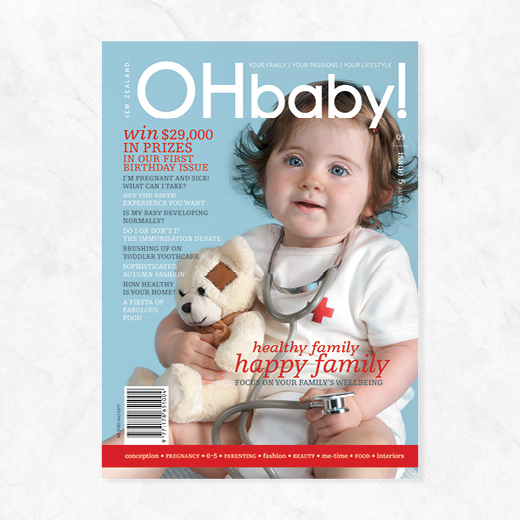
AS FEATURED IN ISSUE 5 OF OHbaby! MAGAZINE. CHECK OUT OTHER ARTICLES IN THIS ISSUE BELOW













Cookie Policy | Terms & Conditions | Privacy policy | Copyright © 2024 www.ohbaby.co.nz. All Rights reserved.