Born too soon
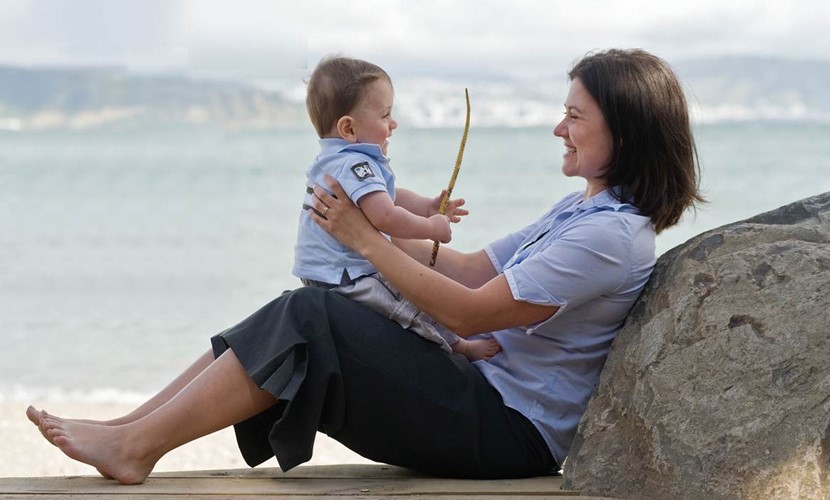
How would you cope if your baby was born prematurely and needed to stay in hospital for a significant period of time? Elizabeth Gasson shares the story of her son Johnathan's birth at 34 weeks, and gives advice for parents facing this situation.
My husband David and I have been together since 1996. We have a dog and a one-eyed cat, but had wanted children for a very long time. On 7 February 2008, we welcomed our first precious child, Johnathan, into the world.
We are lucky as both our families live nearby, and have helped us every day with such dedication and love. We also have an amazing group of friends and neighbours. However, even with this support system, having a baby who needed to be in NICU made me face my deepest fears about parenthood, and it was the hardest time in my life.
Like most mothers-to-be, I had a preconceived notion of what it would be like to give birth, stay in the hospital briefy, and then go home ready to show off my baby to my excited family and friends. Even at 28 weeks pregnant, when I started to have contractions while sitting in our first antenatal class, I didn't realise what was going on - I simply thought that the excitement of the class and the talk of giving birth had triggered some visceral response, not that I could actually be in premature labour.
For the next three weeks, I continued to have Braxton Hicks contractions. Both my midwife and doctor said that this was normal, but they kept a close eye on me nonetheless. At 31 weeks, however, these so-called Braxton Hicks contractions started coming closer together. The contractions weren't painful, but I was admitted to hospital anyway, and given medication to try to stop labour.
The contractions continued for the next five days. I was exhausted and stressed, both from the gravity of the situation and the fact that I was feeling out of my comfort zone. Hospitals don't evoke warm, fuzzy feelings for me. In my mind, people go to hospital when they are gravely ill or dying, so being there was making me feel very uncomfortable. I just wanted to go home, have a shower, shave my legs, and sleep in my own bed.
Fortunately, my contractions abated, and on the sixth day I was permitted to go home. But I was only there for about a week when I felt a funny pain on my right side, under my ribcage. Back to hospital I went. Again I was given medication to try to stop labour. I could see my belly rippling with the force of each contraction, but the only pain I felt was in my right rib. I was reasonably calm, even making polite conversation with the nurses. But unfortunately, the medication didn't work, and soon I was in full-fedged labour. Due to other health complications, my specialist and I decided that my best option was to have an emergency Caesarean. David and my parents had just stepped out for a meal when I called to tell them I was on my way into surgery. They left their food on the restaurant table and rushed back to hospital, arriving just in time to see me wheeled into theatre. David quickly changed into a surgical gown and mask. I wasn't at all worried - I was excited because I knew that I'd soon be seeing my child.
My C-section was textbook, and I was calm throughout. David, the anaesthesiologist, and the doctor were all caring and relaxed. They placed a sheet just below my breasts as a barrier. I could just touch the corner of the blue sheet with the tips of my fngers. For me it was a connection to what was happening, since I could not feel or see anything. Within a few minutes I heard the cries of my baby boy, whom we later named Johnathan (David liked John, I liked Nathan, so we combined the two). My midwife took him away immediately; I strained to see what was happening. I couldn't hear him crying any more, and I was starting to worry. She called David over and he came back holding a bundle in a white blanket. He passed him to me; our son was perfect!
Johnathan was weighed, measured, and cleaned up while the doctors stitched me back together. He weighed 2440grams, was 46cm in length and had an aPGaR of 9/10. These were all wonderful signs. One of the nurses told me that Johnathan would need to be taken to the neonatal intensive care unit (NICU). I thought that was a good sign, that he was healthy and strong. I had no comprehension of what being in the NICU would mean.
David went with Johnathan to the NICU while I spent time in the recovery room, eating a lemonade ice block and chatting to the duty nurse. It was very surreal. I didn't quite comprehend what had happened. My stomach still looked pregnant, but my baby was nowhere to be seen. The next morning, I was wheeled into the NICU to see my son. although Johnathan was born at 34 weeks, which, by the NICU standards, made him one of the bigger babies on the ward, I was completely unprepared for what I saw. To me, Johnathan was so tiny. He was in an incubator, with tubes and wires all over him. He was wearing a tiny nappy, so small it looked like it belonged on a doll. I was frightened to touch him in case I hurt him, but after a few minutes, I put my finger next to his hand and softly stroked it.
The NICU nurse said that Johnathan was doing well, but I didn't believe her. They told me that he had been admitted to the NICU because of "grunting", which was a sign of respiratory distress, and, of course, the fact that he was premature. "If he's doing well, why can't we go home?" I kept thinking. by lunchtime, they had moved Johnathan from an incubator to a little plastic cot bed. It seemed so strange seeing this tiny baby in a plastic container. I could now see him more clearly - he seemed so vulnerable without the incubator protecting him from the outside world.
I watched the nurses checking his blood sugar levels by doing a heel prick. I was frightened that he would scream, but he only cried out for a second. He was brave; I was not. I saw where the needle had pricked him and it felt like they had stabbed me with a metre-long needle, right through the heart. I wondered if this would traumatise him. Then I had to make my brain switch back into "healthy" thoughts - I knew that it was necessary for them to take his blood, and that of course it would not scar him, but the fear and sadness were still real to me, logical or not.
Since I was not used to seeing a baby this small, let alone my own, in an environment like this, all the machines and tubes were overwhelming. The nurses explained that he had a nasal gastric tube in his nose that went to his stomach for feeding, a heart rate monitor around his foot, which measured his blood pressure and the amount of oxygen his blood was getting, and an IV line for fluid in his arm. He also had a heat lamp keeping him warm and another machine to monitor his breathing. They all made strange noises - beeping and pulsing. If Johnathan moved his arm in a direction that restricted the fow of fluid, an alarm would sound. I watched his heartbeat and oxygen levels, praying they would not stop or slow down. However, sometimes they did. Alarms would sound and my heart would stop, until I realised that the little band had just slipped off his tiny foot. It took a while for my panic to abate. In the end, I decided that the band was quite cute because it was so tiny. I took one home to put in his baby box.
I stayed in the maternity ward for the next few days, where I was taught how to breastfeed. It was bizarre having a stranger showing me what to do with my breasts. I thought I would be uncomfortable, but I was just focused on learning so that I could give the vital colostrum to Johnathan. We had to manually squeeze the colostrum from my nipple into a syringe, which would then be squeezed into Johnathan's feeding tube. It took a long time, but I remember how excited David and I were when we reached 5ml.
Due to my health complications, I could not stay all day in the NICU. I needed to rest and Johnathan was asleep a lot, so we would come and go every few hours. This may have contributed to my feeling of surrealness. On the third day, I was discharged from hospital, and we were invited to stay overnight in the rooms at the NICU. We went home briefy and gathered what we needed. I packed a few family pictures. Unfortunately, on my second night in the NICU, I had further medical complications and was admitted back to the maternity ward. When I was discharged two days later, we couldn't stay long in the NICU as the rooms are in constant demand. We had no choice but to go home. Leaving Johnathan behind was agony. I felt that I had failed my child, that I was a "bad mother", and I blamed myself for going into premature labour, which had put him in danger. I was so frightened for him and angry at myself. I cried a lot in those early days, but I also coped with the shock of Johnathan's premature birth by putting on a euphoric face, to mask my true feelings of anxiety, so I would not be judged by others.
The staff in the NICU deal with anxious parents and premature or sick babies every day. It's a difficult and delicate task, balancing the needs of their tiny patients with the reassurance needed by the parents. How parents cope with their child's stay in the NICU varies from person to person. David coped by affirming his belief that our son was staying in "Baby Hilton". In my husband's eyes, Johnathan was being cared for at a six-star hotel, with all of his needs met 24/7. My way of dealing with it was to ask lots of questions. I'd write each question down, then ask the nurse to write the answers when she had a moment. Writing those questions down helped, as I could go back over my list and start taking all the information in.
At two weeks of age, Johnathan was finally released from the NICU. I had hoped I would feel better when we arrived home, simply because we were out of the hospital environment. But I still felt scared. What if I couldn't keep Johnathan safe? What if he got sick and I couldn't make him better? I felt panicked all the time and was irrationally afraid of everything he came into contact with. 
It took me a long time to realise that my fears originated from the unjustified guilt I felt over Johnathan's premature birth. He was so small and precious, and I was so afraid I'd lose him. Eventually, I learned that this way of thinking was self-defeating. Instead of berating myself for things that were not my fault, I should have sought help earlier. The "stiff upper lip" concept is rubbish. What I really needed - what all parents going through something like this need - is support, time, rest, and especially understanding, and to avoid judgemental people.
It has taken me a long time to come to terms with having a baby born early. By being open and honest, by asking for things that I needed to help me feel more secure and less afraid, and by being informed about my choices, I feel that we had the best possible care I could have hoped for. I now have a very happy and healthy baby boy who is a constant joy and bright spark in our lives.
Strategies for coping if your baby is in the NICU
1. If you are feeling unhappy or anxious, respect those feelings, and talk to people you feel close to rather than ignoring how you feel. Try writing them in a journal.
2. Leave a message on your phone asking people to call before they come by, in case you don't feel like visitors.
3. Once your baby is home, talk with your partner about the common rules in your household that will help to keep you comfortable and lower your anxiety, for example, asking people to wash their hands before holding your baby.
4. If you are worried about taking your new baby out, for example, to the doctor's office, and exposing them to germs, ask if there is a separate room where you can wait before appointments, away from other sick people. Or place a cover over the pram or capsule so people won't be tempted to touch your baby without your permission.
5. Make sure you have people who can come and help you with housework and cooking.
6. Keep in touch with your healthcare professional, and let them know how you are feeling. Be honest!
7. See a counsellor. They can help you maintain a healthy perspective.
8. If you are still struggling and feel like you can't cope, there are medications that can help, and that are safe to take while breastfeeding. Talk to your GP about your options.
9. Look for support networks in your area or online, where you can talk about your concerns.
10. Make sure you get plenty of both rest and exercise. Ask a friend or family member to babysit while you sleep - I don't know what I would have done if my mother had not helped me get some sleep!
11. It takes time to feel yourself again, so be kind to yourself while you are going through this process.
12. Invite your partner to talk about his worries or concerns too, so you can take his feelings into account.
Elizabeth Gasson is Mum to one-year-old Johnathan.
As seen in OHbaby! magazine Issue 5: 2009