

Mama of five, midwife, and lactation consultant, Stephanie Callaghan-Armstrong shares her advice on how to wean your baby.
There's so much focus and information to be found on establishing breastfeeding and having a good milk supply, which is great! But when it comes to slowing or winding down your breastfeeding journey, it’s tricky to know how to go about it!
Every breastfed baby will of course need to wean eventually and there are many different ways to do this. There are also so many reasons why babies are weaned at different stages. I totally respect everyone makes their own decisions about how they feed their babies and family situations are all unique, so please feel free to use this information as a guide and pick and choose what’s relevant to you.
The World Health Organisation recommends for babies to be breastfed exclusively for around six months before being given solid food, and then continue with breastfeeding in conjunction with established solids until the second year of life.
In our western society we tend to find babies are weaned off breast milk a lot earlier than some other cultures. With my own children, I was breastfeeding altogether for the better half of a decade and allowed my babies to naturally wean, which they did between one and three, which is a good example to show all babies are different! It sounds like a lot, but as baby becomes a toddler they usually feed for very short periods and possibly only once a day. Your milk is ‘liquid gold' so as a lactation consultant, I really do support mums breastfeeding babies for as long as they and baby are wanting to, even a small amount is beneficial.
Breastfeeding through baby's second winter is such a bonus too, as it is so protective of the increased viruses and bacteria they will be exposed to, especially if they start daycare.
In addition to breast milk being an optimal nutrition for baby, there is a lot of research on the benefits for brain and jaw development, and speech, from latching onto the breast in the specific way needed to remove milk. Breast milk also provides protection from diseases later in life (for mum too).
A breastfeeding mum is in a very special partnership with her baby which we call a ‘dyad’. Gentle weaning, preferably led by baby, is the best way to go. Understanding how milk production firstly initiates and then winds down (called involution) is a good place to start... Your breasts are milk factory glands that in puberty pre develop for milk production. When you become pregnant, hormones further change the mammary gland to make milk. Milk ducts and alveoli sacs grow (often likened to a tree growing its trunk, branches and leaves), as the pregnancy hormones mature the gland to prepare it to feed baby after birth. Many women experience colostrum leaking in pregnancy before baby comes as it starts production.
When baby is born, colostrum is readily available and with the hormonal changes after the placenta is delivered and baby suckling, it's like a green flag for your breast to start making milk. This stage is called Lactogenesis One.
This kicks in about day three postpartum and we often call the it the milk 'coming in'. Usually a mama has very full breasts, which settle down in a few days as the milk supply establishes. Regularly removing milk by feeding baby or expressing sends the message to the brain to make more milk and lessens engorgement.
This is the next stage and spans from the time milk supply is established until involution (the winding down of milk production). The alveoli or milk sacs have basket-like muscles around them that contract when there is a let-down (the ejection reflex that is in response to hormones from the brain released when baby suckles – or even sometimes thinking about feeding her baby, some mums can feel a slightly burning sensation signifying feed time and the breasts fill ready to feed). Usually there are up to several let downs every breastfeed and the hormone release can be inhibited under stress, pain and perceived pressure to breastfeed.
Involution is where the breast milk factory closes down and shuts shop. When milk stops being removed regularly, it sends the message to stop production. The alveoli sacs shrink and break down back to their pre pregnant state and the ducts revert back to their very basic structure. Involution takes around 48 hours and is pretty much irreversible after that time frame. That is why it’s vital for a mum to not miss breastfeeding baby for any length of time (or expressing if unable to feed) if they plan to carry on with feeding, as it really doesn’t take long for milk supply to be impacted.
Milk composition adjusts during weaning also. As milk volume decreases so do the fats, proteins and sugar. Interestingly, the protective antibodies and immunoglobulins increase, giving baby an extra boost as they begin the weaning process.

So when is it the right time to wean and what are the reasons mums decide to stop breastfeeding? Looking at statistics in NZ and globally, a high number of new mums start by exclusively breastfeeding at birth but we see some sharp declines at three main stages; six weeks, three months, and six months.
The main reasons for the initial decrease is due to new mums feeling they don't have enough milk for baby. In my experience of working in this area too, I would add that many are finding it painful. I would encourage any mum who is finding low milk supply or pain, to get support from a lactation consultant, it’s really often an easy fix with the right support.
Whatever the reason, the best way is to try to make the transition as gentle and slow as possible. A natural weaning process will see breastfeeds gradually spaced out and replaced with solid foods and water. If baby is younger and not yet on solid food, start the transition to your alternative very slowly, to allow baby's gut adjust to the different milk. This also allows your breasts to adjust, reducing the risk of mastitis and discomfort.
This gradual approach may not be possible if mum needs to urgently wean baby off the breast. Reasons for this may include mum suddenly needing to take a medication, or for physical or mental health reasons. Another cause is that sometimes babies can go on a ‘feeding strike’ and refuse to breastfeed (if you wish to continue breastfeeding it’s crucial to start pumping in place of feeds to protect supply in the meantime).
There are some prescribed medications for stopping your milk, especially if it’s sudden, to help ease the discomfort of engorgement. There are also natural herbals teas, supplements, essential oils and homeopathic remedies and sprays that are said to help naturally lessen milk supply if you’re wanting a more natural approach. Drinking lots of fluids and taking Vitamin C are beneficial at preventing mastitis. Please consult a health professional or lactation consultant if you need advice about this.
If you experience signs of mastitis (usually severe pain, high fever and red areas on the breast) during weaning seek medical advice also. For mild fever and pain, Panadol is ok to take.
Binding your breasts or wearing a supportive, tight bra, and cold packs may help make you more comfortable in the early days, especially with a more sudden method. Massage can help with lymphatic drainage and reducing inflammation also, massage from the nipple towards your armpits, with oil or in the shower.
If you’re planning on going back to work it’s a good idea to introduce a teat/bottle with expressed breast milk sooner rather than later, otherwise you may risk bottle refusal. We recommend you wait to do this until breastfeeding is totally established, usually around the four weeks mark, but can differ depending on circumstances.
Many workplaces are supportive of mums expressing during work hours and happy to provide a comfortable, private place for you. If this is not a reality in your workplace currently, be the change and ask! There is the World Health Organisation Code to support you in saying you want your baby to be able to have breast milk for as long as possible. When introducing expressed milk by bottle, heat it gently in hot water as opposed to a microwave so the antibodies are not destroyed.
Whatever path you choose and however long your breast feeding journey is for, I encourage you to intentionally make the most of it. Babies grow up so fast, and if you're anything like me you will surely look back on these times and wish for a wee moment again with your snuggly little baby on your breast.
Stephanie Callaghan Armstrong is a mum of five, experienced lead maternity carer, midwife and lactation consultant and also runs a breast pump rental and sales business with husband, Dr Mikey from The Barnstead in Coatesville. Find her at babymed.co.nz, @babylove.midwife.life and @babymednz on Instagram.
PHOTOGRAPHY Catherine Smith

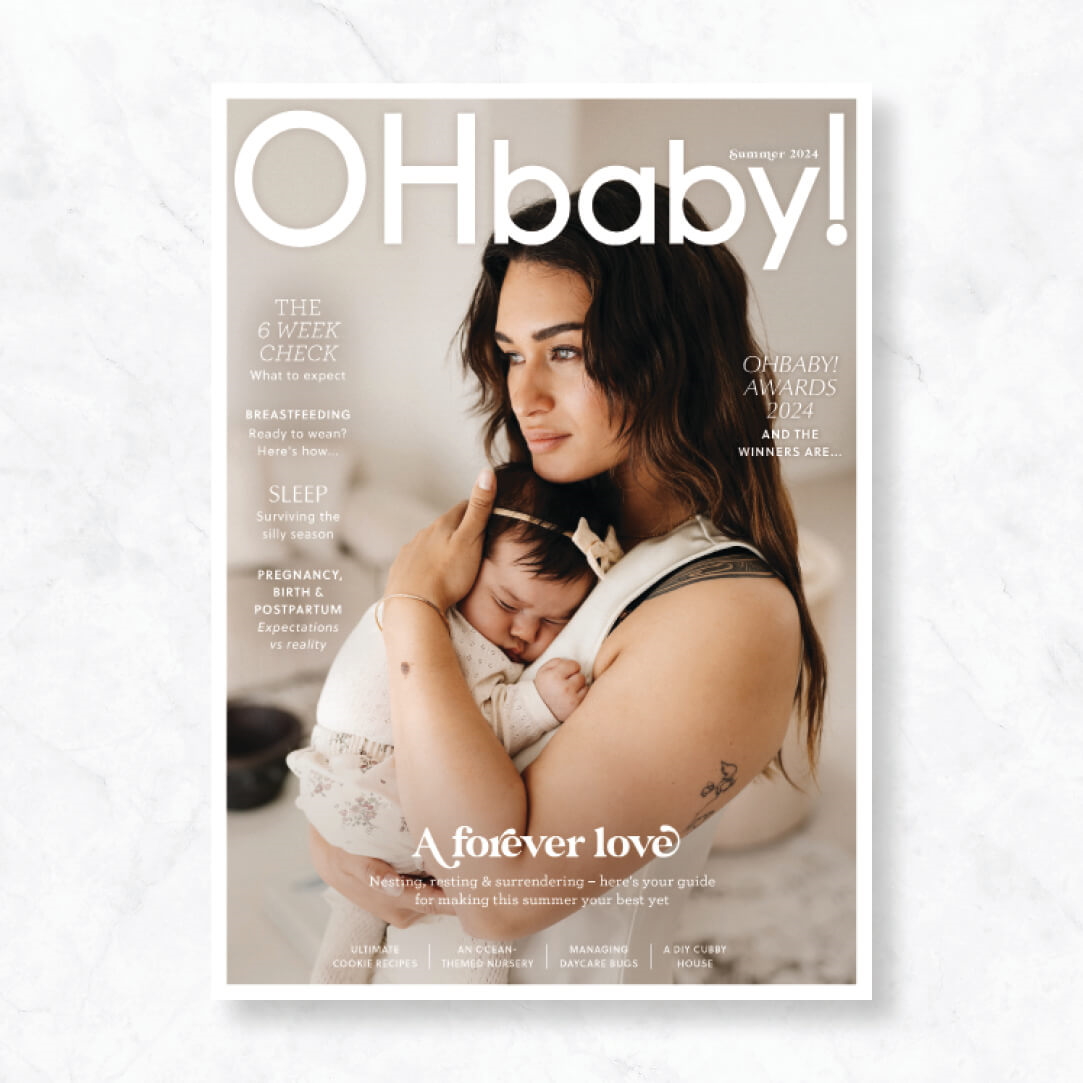
AS FEATURED IN ISSUE 67 OF OHbaby! MAGAZINE. CHECK OUT OTHER ARTICLES IN THIS ISSUE BELOW
Cookie Policy | Terms & Conditions | Privacy policy | Copyright © 2026 www.ohbaby.co.nz. All Rights reserved.