

Master the art of breastfeeding from day dot with expert guidance from mama of five, midwife and lactation consultant, Stephanie Callaghan-Armstrong.
The breastfeeding image often portrayed to the world is a gazing mama with perfect hair holding baby in an effortless cradle hold pose. In reality, especially at the start, achieving this doesn’t always come so naturally.
The optimum way to latch and breastfeed baby however, is whichever position is most comfortable and practical for a correct latch. No top, milk flowing, wet feeding bra and breast pads, attempting to latch baby with support in different positions and hair in a messy mum-bun is how it really is. This is the perfectly imperfect part of your bonding process where being close to you and learning to breast feed together, kicks of your nurturing mother-child relationship for life.
It's always good to remind ourselves about our ‘why’ when it comes to breastfeeding, as we plan to learn a new thing that can take time to get right.
Breastmilk is a superfood for babies. It contains everything baby needs to grow, has lifelong health benefits for both you and your baby (it is protective from breast and other cancers in mum) and helps baby to be protected from viruses and bacteria. The World Health Organisation recommends that baby is breastfed until the second year of life if possible.
Suckling correctly at the breast also helps with baby’s jaw and speech development and maintains your milk supply for longer than pumping milk and feeding with a teat, so it’s definitely worth working on feeding directly at the breast.
There are many different breastfeeding positions. Breastfeeding is often referred to as an art, and as we all know, art is unique. Every mum and baby have a different mouth, breast, nipple size and shape combination, gestation when born, birth type and preferences.
Baby’s first feed is ideally within a short while after birth during the skin-to-skin contact time. Skin-to-skin is recognised as the very first step for baby to smell your colostrum before latching, nuzzling the Montgomery glands (the bumps around your areola that excrete their own natural oil and scent) and hear your heartbeat after the sudden ‘surprise’ of coming into the world. Protect this being interrupted as much as possible. Lights dimmed, chest to chest, warm towels on baby, prolonged cord clamping, gentle voices or music etc. If you have a caesarean section and baby is able to have skin-to-skin time in theatre, tuck your newborn under the drapes on your chest. Usually the first feed is then assisted by your midwife in the recovery area. Baby’s dad or your support person can also possibly have skin- to-skin contact until you are able to breastfeed. If baby was born and needs taking away for resuscitation, bring baby back skin-to skin as soon as possible.
A good latch in whatever position you use, is so important for establishing a good milk supply. Latching correctly onto the areola and the subsequent removal of colostrum and milk sends messages to the brain to ask for more milk to be made, so from the very first breastfeed, have support to position and latch baby right and feed every few hours thereafter to set you up for a positive journey.
If latching and feeding baby isn’t possible after birth, expressing fresh colostrum by hand to give baby is the next important step. This sends your brain the message to make milk in the absence of suckling and to give baby their first feed of liquid gold filed with antibodies. Some mums’ express colostrum into syringes before birth for this purpose.
A good, deep latch is when baby has latched well onto the breast – it shouldn’t hurt when they are suckling. Baby’s top and bottom lips are rolled back and flanged open and you can hear swallowing and the sucking looks rhythmic. Usually the jaw is moving right back to baby’s ear. Many new mums can feel that baby is latched and suctioned well onto their breast. The nipple should be right back in baby’s mouth safe from being damaged. It also means baby can stimulate your milk supply well by removing milk effectively and sending the brain the message to make more. Baby should have a good suction and a suck, swallow and breathe rhythm.

An incorrect latch is when baby is mostly attached to the nipple not the areola (the darker part beyond the nipple). Baby will suck in more of a chewing motion and often it is painful. Baby’s lips often are turned in and you may hear clicking sounds, see dimpling in the cheeks as they suck and usually it usually won’t ‘feel right’ or be painful. Always take baby of the breast and reattach to prevent nipple damage (the number one reason new mums give for stopping breastfeeding early). Pop your pinky in the corner of baby’s mouth to release the suction to avoid nipple damage as baby comes off.
If you are finding it difficult, ask your midwife to spot check you or help you. Correct latching in the early days of feeding colostrum before your milk comes ‘in’ is vital for a good milk supply and helps prevent engorgement later on. Make sure baby can breathe through their nose by positioning their head and your nipple should be the same usual shape when baby comes of the breast if latched correctly.
It is also important that baby opens their mouth wide as you latch. Babies have what is called a rooting reflex especially designed to cause them to open their mouth when they touch your nipple. When you tickle the corner of their mouth, you will see baby shake their head a little and open. Be ready to bring them onto the nipple with your nipple pointing to the roof of their mouth. This makes it easier for baby to latch on to as much of the areola as possible.
Once baby starts suckling and swallowing, it’s best to hold the breast in the wedge for a short while longer until you can see baby has got a good stable latch. If you take away your hand supporting your breast straight away, baby can slip down the nipple. Babies then may painfully chew and damage the nipple ends.
There are many positions to try that can give you a good, deep latch and are manageable for you to latch baby onto the breast yourself. Two golden rules are to make sure baby latches well to get a good seal onto your areola and keep baby’s tummy toward your tummy so their head is facing the breast, supporting baby’s back and neck so they are aligned.
|
The cradle hold and cross cradle holds |
The football hold |
|
Side lying positions |
Laid back positions |
When I breastfed my own babies, every one of them was different. Some of my babies were challenging to feed, even with me being a lactation consultant and midwife! Even if you are having your second baby and beyond, it can feel brand new all over again when you breastfeed a newborn. Never be afraid to ask for help.
Use props and pillows and a good chair for breastfeeding to get really comfortable. Have a water bottle and maybe a snack handy too!
The ideal position is sitting up with a straight back, feet flat on the ground or on a foot stool with knees bent in a tabletop position. When baby is small, use a feeding pillow or a few cushions to mould around you so baby is tummy to your tummy and you’re not slouching down to bring breast to baby. If your shoulders aren’t back they will get very uncomfortable and sore. Think ‘baby to breast’ whichever position you latch baby in, not the other way around.
For extra-large breasts, sometimes rolling a small towel helps to give some lift from underneath so the nipple is more central for baby. For very small breasts, an extra pillow may help you maintain the baby to breast position better.
Sometimes you may find it difficult to latch baby onto one side more than the other so you should experiment with different positions for each breast. Occasionally, due to the type of birth or way baby was lying in utero, they can be born with tightness in the head, jaw or neck etc. Body work from an osteopath or therapist that helps with freeing up movement may help. Ask your midwife or other mums in your community who is recommended for small babies.
Your midwife or lactation consultant will do an oral examination of baby’s mouth to check the palate for a cleft palate or a high palate, and for any tongue or lip tie that may be interfering with baby’s latch. Some babies may be recommended to have a tongue or lip tie release (frenotomy) performed and it can result in baby latching and feeding way more comfortably straight away. Some babies have lower tone after birth particularly if they were premature or maybe have been born with special needs. They may even latch on, but slip of easily or not sustain suckling. There are special techniques and positions to support baby to feed if baby is slipping down. My favourite is the 'dancer' position that supports a baby’s jaw with a weaker tone.
Engorgement of breasts when your milk ‘comes in’ can be the cause of difficulty latching baby also, because the areola becomes swollen and hard and baby cannot compress and get good suction to latch. Hand expressing to soften your areola may help or using a breast pump for a few minutes before feeding. Breastfeeding baby frequently every few hours from birth helps to reduce the risk of engorgement.
If you have flat or inverted nipples it could also be more difficult for baby to latch on also as the nipple is unable to be drawn back deeply into the baby’s mouth.
Don’t give up or think you can’t breastfeed if this is you! Before you give birth to baby, talk to your Lead Maternity Carer (LMC) about your nipples. Rolling your nipples out gently during pregnancy can help and there are also breast shells you can buy to wear inside your bra to help draw your nipples out. When baby is born, hand expressing before feeds, and pumping can help bring the nipples out before latching. Over time, breast feeding may permanently bring your nipples out.
Occasionally your LMC or lactation consultant may suggest using a nipple shield to assist in latching. Use shields only for a very short time as they may interfere with the message your baby suckling on the breast sends to the brain to make milk. Always express several times a day after feeding if using nipple shields to prevent your milk supply dropping.
Remember, every baby and breastfeeding journey is unique. It takes time for it to feel like it’s second nature, some mums find it comes more natural than others.
Try not to compare. Take it day by day and know as baby grows, they get stronger and fid latching and suckling easier too. Before you know it, that classic cradle hold will feel like a breeze. All the best amazing mums!
Stephanie Callaghan Armstrong is a mum of five, experienced lead maternity carer, midwife and lactation consultant and also runs a breast pump rental and sales business with husband, Dr Mikey from The Barnstead in Coatesville. Find her at babymed.co.nz, @babylove.midwife.life and @babymednz on Instagram

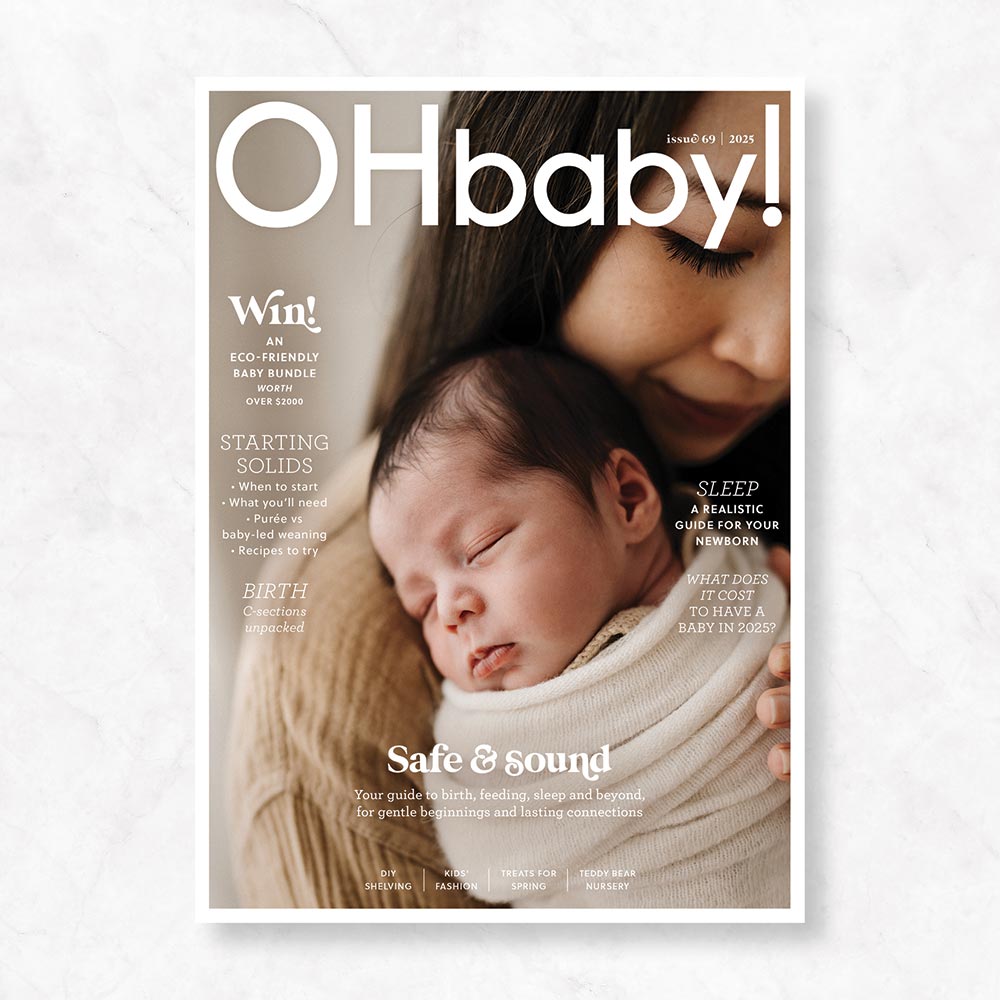
AS FEATURED IN ISSUE 69 OF OHbaby! MAGAZINE. CHECK OUT OTHER ARTICLES IN THIS ISSUE BELOW
Cookie Policy | Terms & Conditions | Privacy policy | Copyright © 2026 www.ohbaby.co.nz. All Rights reserved.