

Therapist, educator and researcher Jo Roberston has three boys, but yearned for a girl. Here’s her account of navigating gender disappointment...
I had been so sick this pregnancy, so much worse than before. I was throwing up every day all day coming up to my 20 week scan, it was shocking how different these pregnancies were. This had to mean something – maybe it was a girl! It was my one-year-old boy's first birthday and as a treat we were going to find out the sex of his new younger sibling. Given how much worse this pregnancy had been we wondered if it meant it was a girl. We didn’t think we wanted three children so this was my opportunity to have a girl. I didn’t mind too much with the first child because I figured my girl would come later if it was a boy, which it was. I’m lying there with the ultrasound technician and Dave, my husband, waiting for the words, “it’s a perfectly healthy… boy” he says. I cry. Now this is embarrassing. Gender disappointment, although very real, is a socially unacceptable emotion that we don't want to admit out loud. I rally myself in front of the sonographer and Dave, knowing I am still so excited to be having another baby after a history of infertility and previous miscarriage. I look to Dave and say “oh well, I guess we are having three kids!”.
Gender disappointment is the feeling of sadness or grief after finding out the sex of your child is the opposite of what you were hoping for. Reports suggest up to 1 in 5 women experience some kind of gender disappointment with a child they are carrying. For some, these are just twinges of sadness that can be quickly recovered from. But for others, like myself, it becomes an ongoing grief journey. I am aware that sex and gender are different things; sex is the anatomical characteristics of a person, while gender is the set of traits that are commonly attached to that sex. This is why it is ‘gender disappointment’ not ‘sex’ disappointment, because it’s the grief of an idea, an imagined reality set to traits and behaviours. It's not disappointment about the penis or vulva, it’s about the life that is often envisaged with that body. This is where all of us in gender disappointment land know there is an irrational component, we are not pretending it makes sense, we are grieving a picture in our minds about our future.
A couple of years later, finding ourselves pregnant with our third baby, we decided to wait to find out the sex until delivery. We had wanted at least one surprise, and knew this would be our last baby.
Again, I had an extremely different pregnancy, barely any sickness or symptoms, just breezed through. I wondered if because this was the least sickness I had ever experienced that it could mean a girl, finally. I thought surely we were due a girl, I couldn't fathom having three boys. That was way outside anything I ever envisaged. I knew everyone around me was hoping for a girl, they knew that's what I wanted, and many of them wanted that too. I had had girl’s names written out since I was a child, knowing one day I would have a daughter I could be close to just as I was close to my mum. I dreamt of the forever best friend I would have – of course these are fantasies not at all grounded in what real life can actually bring.
I was having a caesarean section, I wasn’t feeling great but was hanging on, so excited to meet the final piece to our family puzzle. They said “we know what it is”, the whole team already knowing we had two boys. They lifted my new baby up and said “it’s a boy”. I laughed. At least that’s better than crying this time! I laughed and said “of course it is, that's all I make” with total peace and acceptance. I wasn't sad, I just thought he was adorable, our last little baby that looked perfect and went straight to my chest for his first feed.
We were in our own bubble for an hour and then went to text family and friends, this was the first pang for me, realising other people may be disappointed.
That's one of the hardest things about having all the same gender, knowing others would be more excited if it was different. We’ve all seen the gender reveal parties on social media, the level of screaming when it’s the 'desired' gender is that much stronger and higher pitched. I knew I wasn't going to be receiving the higher pitched screams, metaphorically speaking.

For the following year, I enjoyed the 'three boy-ness' of my life. I enjoyed people’s comments while we were out, three boys within four years was a vibe! I was also too tired and overwhelmed to have many other feelings about having never had a girl. After this year however, I hit a big grief wave that lasted a long time. As I watched friends go on to have girls, saw friends' daughters get older and get dressed up for school discos, and watched little girls head off to their first dance classes, my heart began to break. It was a private wound, one you have to protect from others for fear of their judgment or lack of empathy. It is also a privileged wound, as of course it's a gift to have even been able to have three kids, a gift many people still dream of. Some days it would hit harder than others, usually after people had said unknowingly painful things; “a daughter is a friend for life”, “mums need to let go of their sons at some point”, or “sons just don’t talk to their parents when they grow up”.
I’m always curious, and jealous, when people say they don’t mind what sex or gender their children are, I find they usually didn’t have a clear image of their children or family while they were growing up. They didn’t imagine a particular life, outside of wanting to be a parent and love on their children. I only ever imagined myself with girls, I never even imagined I would have boys, it didn’t occur to me. I had and still do have a very close relationship with my mum, we spent a lot of time together growing up and it was such a formative relationship. I am also very passionate about girls and women, the messages they receive about gender and supporting their aspirations.
As a female who at times was told to be less than myself, or allow men to move ahead of me, I can’t help but fight for something different for women – it's personal. It seemed like such a natural fit that I would have girls.
As a counsellor I know two common approaches to grief that never work, the first one is keeping it to yourself, and two, pretending it's not there. So I knew the only way I could navigate this would be to be honest with myself, be honest with the right people, and give myself a lot of compassion. Telling ourselves off for our feelings doesn’t do any good. So I vented to one mum in particular who had walked a similar path – a mum of three boys who had longed for a girl. She gave me permission to say all the things, to feel angry, to feel hurt, to feel guilty. I would text her out of the blue when the emotion struck and knew it was a soft landing place. People too quickly reply with “oh but you wouldn’t not want your boys”, or “but surely you wouldn’t change it” and of course not, obviously I love all my children dearly, however that doesn’t void my grief. Feelings are often nuanced and complex, it is possible to grieve the dream of a daughter and celebrate my boys at the same time. To offer myself compassion I had to truly accept the concept that feelings are ‘amoral’. I think it's easy to categorise our emotions into ‘good’ or ‘bad’, some are to be celebrated while others are criticised. I was fortunate to have parents growing up who taught me about 'righteous anger', that anger had a place in our lives and could be utilised for good. So I knew that anger was an acceptable, and in fact useful, emotion however gender disappointment still squarely seemed to land in the 'bad feeling' box. So I had to coach myself in this, like I would a client. Feelings are not inherently ethical or unethical, it is only the behaviours from feelings that we can assess within that framework. I used a strategy called ALL to navigate moments of particularly strong disappointment.

A = Acknowledge: I’m grieving, I'm feeling sad that the family picture I had growing up isn’t here.
L = Link: It makes sense that I feel like this, I wanted a girl to have a similar relationship as I had with my mum, to grow a strong female in this world, and enjoy similar hobbies together.
L = Let go: It’s okay to be sad. But this feeling is only grounded in an idea, there are no guarantees I would have had a relationship like that with a daughter, it's just a picture. It's okay to grieve it, I can feel it and then let it move past me like the wind.
Jo Robertson is therapist, educator and researcher with a focus on sex, relationships and parenting. Jo lives in Auckland with her husband Dave and their three energetic boys. Visit jorobertson.org or follow her on Instagram @sextherapistjo

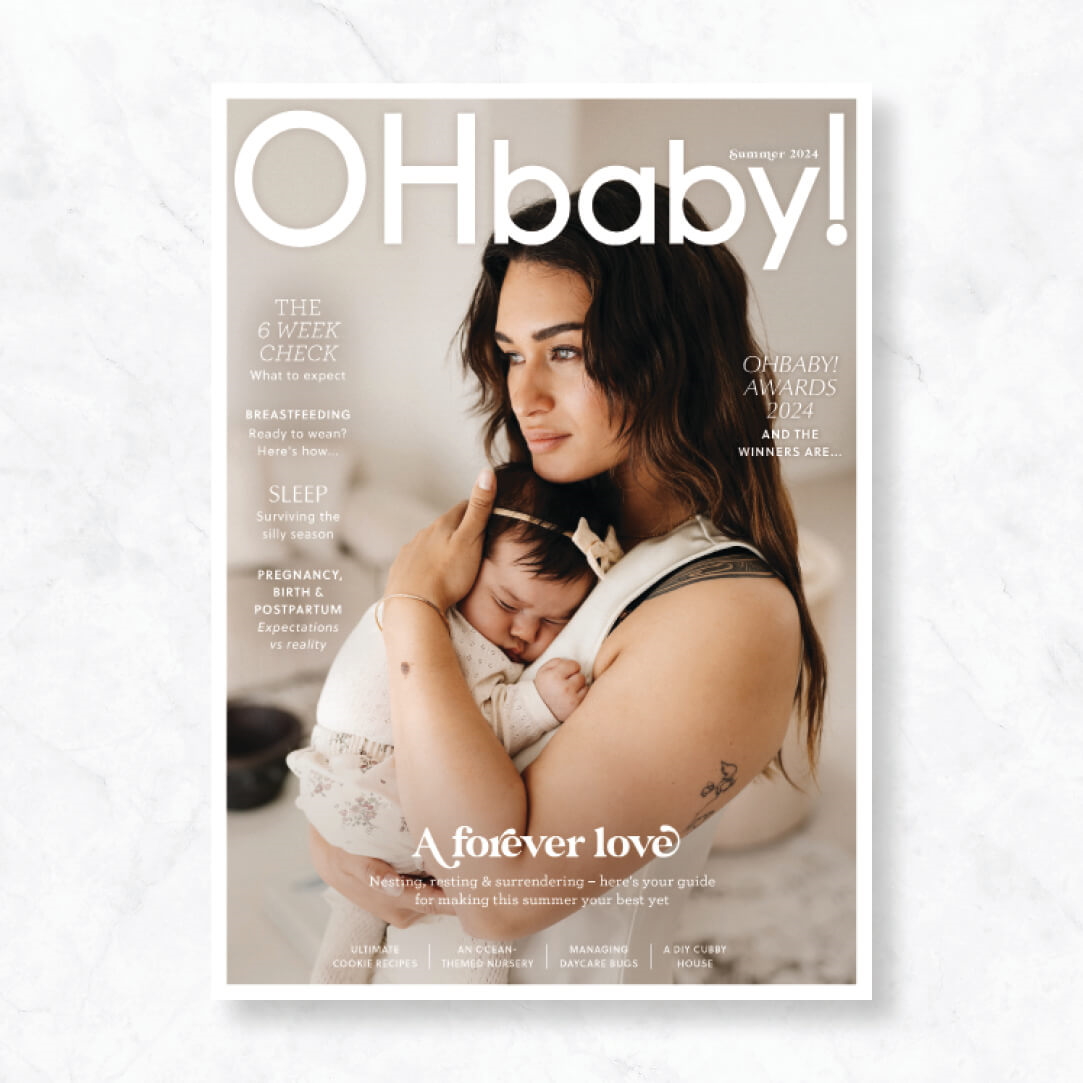
AS FEATURED IN ISSUE 67 OF OHbaby! MAGAZINE. CHECK OUT OTHER ARTICLES IN THIS ISSUE BELOW


Cookie Policy | Terms & Conditions | Privacy policy | Copyright © 2026 www.ohbaby.co.nz. All Rights reserved.